
How to Control Algae Naturally in Your Aquarium (Without Chemicals)
This guide is created by Green Chapter — Nature Workshop Studio, where we focus on creating living ecosystems through hands-on experience. We share practical insights across terrariums, aquascaping, plants, and natural systems to help you build and care for your own.
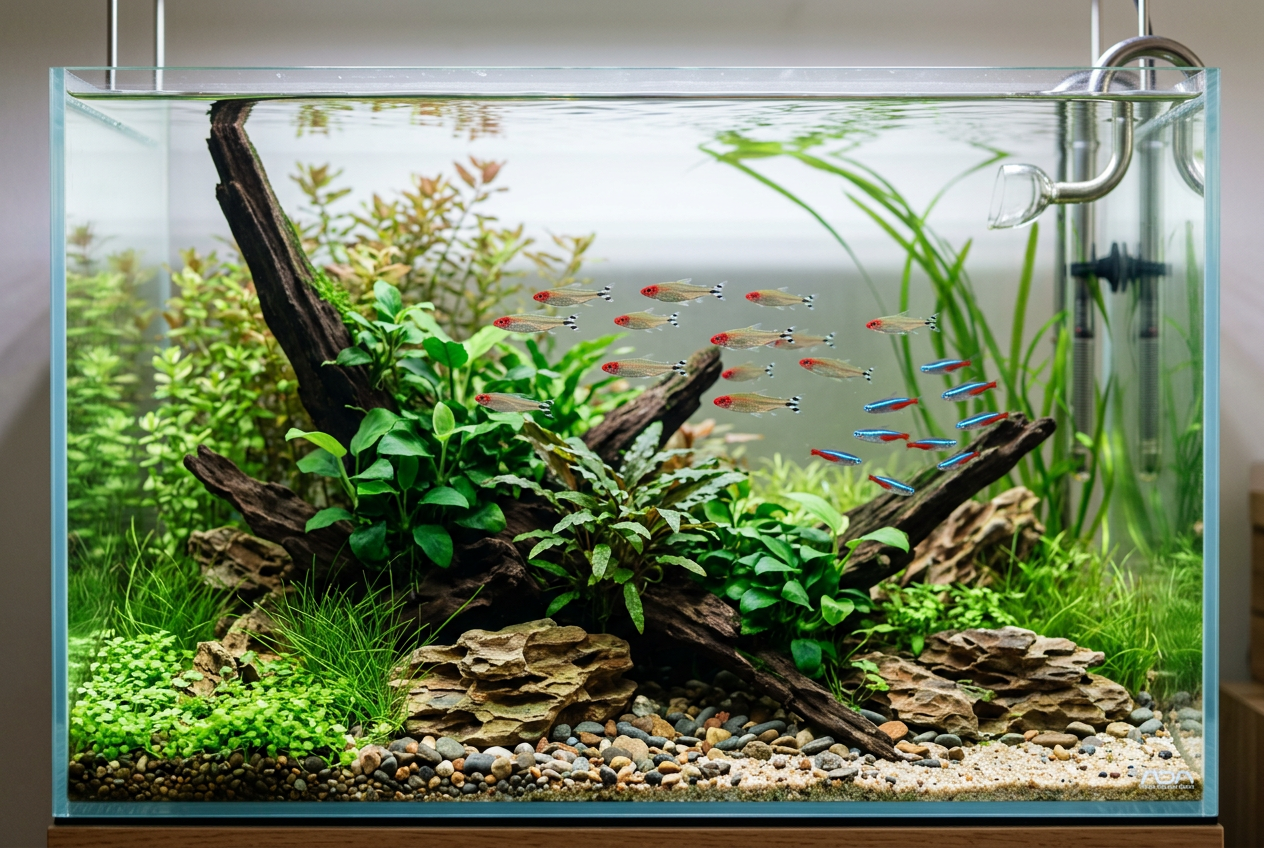
Algae Is Not the Enemy
If you’ve started an aquarium, algae will show up. Green patches on glass, brown dust on the substrate, or soft fuzz on wood and rocks—it feels like something is going wrong.
But nothing is wrong.
Algae is part of every aquarium system.
The goal isn’t to remove it completely, but to keep it under control.
Algae grows quickly when conditions allow it. When something in the tank is out of balance, algae is usually the first to respond.
What Triggers Algae Growth
Algae appears when light and nutrients are not in balance. Once both are available in excess, algae takes advantage.
Too Much Light
Light acts as fuel. The longer it runs, the more opportunity algae has to grow.
- Lighting beyond 8–10 hours daily
- Direct sunlight hitting the tank
Both will accelerate algae growth very quickly.

Excess Nutrients
Every aquarium naturally produces nutrients through fish waste and uneaten food.
When this builds up:
- Overfeeding
- Overstocking
- Lack of maintenance
…it creates a constant food source for algae.
No Competition
If nothing else is using those nutrients, algae will.
This is common in:
- Newly set up tanks
- Tanks with few or slow-growing plants
Without competition, algae spreads easily.
How to Control Algae Naturally
Instead of using chemicals, focus on restoring balance. Once the system stabilises, algae naturally reduces.
Set a Stable Lighting Routine
Lighting is the easiest thing to correct.
- Keep lighting to 6–8 hours daily
- Use a timer for consistency
- Avoid placing tanks near windows
A stable schedule is more effective than constantly adjusting intensity.

Use Plants to Compete
Plants absorb the same nutrients that algae depends on. When plants are healthy and growing, algae has less to work with.
Adding more plants helps to:
- Reduce excess nutrients
- Stabilise the system
- Slow down algae growth
A well-planted tank naturally keeps algae in check.

Feed with Control
Feeding more than needed is one of the fastest ways to trigger algae.
- Feed only what fish finish within 30–60 seconds
- Remove uneaten food if needed
Small excesses build up over time and fuel algae growth.
Maintain with Water Changes
Water changes remove nutrients before they accumulate.
- 20–30% weekly works for most setups
- Increase frequency if algae is already present
This keeps the system from drifting out of balance.

Add Clean-Up Crew (Support Only)
Some livestock will graze on algae, helping to manage its appearance.
- Small algae-eating fish
- Shrimps
- Snails
They help maintain surfaces, but they don’t fix the root cause.
If the tank is unbalanced, algae will still return.
Let the Tank Stabilise
New aquariums often go through algae phases. This is part of the natural cycle.
As the tank matures:
- Beneficial bacteria establish
- Plants grow stronger
- Nutrients stabilise
With consistent care, algae usually reduces on its own.
What to Avoid
Avoid reacting too quickly or aggressively.
- Using algae chemicals immediately
- Scrubbing everything too often
- Changing lighting settings constantly
- Over-cleaning filters
These actions disrupt stability and often make algae harder to control.
A Better Way to Think About Algae
Algae is not something to fight—it’s something to read.
When it appears, it’s telling you:
- There is too much light
- There are excess nutrients
- The system needs balancing
Fix those, and algae will naturally fall back into place.
Continue Learning
Aquarium snails are far more diverse than many hobbyists realise. Some reproduce explosively in freshwater, while others barely multiply at all. Some are excellent algae grazers, while others become indicators of excess waste and overfeeding. Understanding how different snail species behave helps you build a healthier, more balanced aquarium ecosystem.
Continue exploring these related freshwater aquarium guides:
- Why Some Aquarium Snails Multiply Like Crazy — While Others Never Reproduce
- How to Breed Rabbit Snails Successfully
- Why Nerite Snail Eggs Never Hatch in Freshwater
- How to Control Algae Naturally in Your Aquarium (Without Chemical)
- How to Control Aquarium Snail Population Naturally
- Are Snails Good for Aquarium Maintenance?
Each article explores a different part of freshwater aquarium ecology, helping Singapore hobbyists better understand snail behaviour, breeding patterns, algae control, ecosystem balance, and long-term planted tank stability.


