
How to Breed Rabbit Snails Successfully
This guide is created by Green Chapter — Nature Workshop Studio, where we focus on creating living ecosystems through hands-on experience. We share practical insights across terrariums, aquascaping, plants, and natural systems to help you build and care for your own.
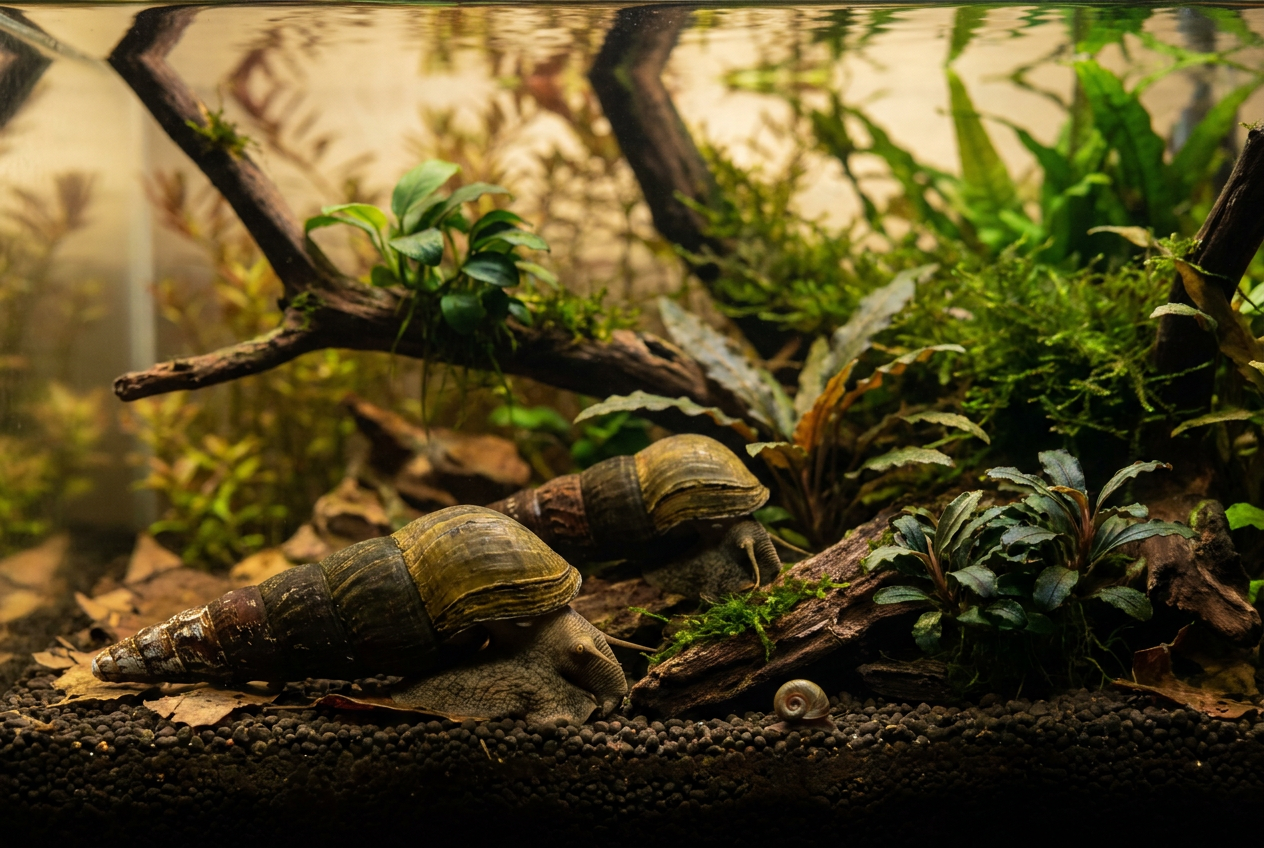
Among freshwater aquarium snails, rabbit snails are completely different from the fast-breeding “pest snail” species many hobbyists fear.
They do not suddenly cover the glass in hundreds of babies.
They do not lay large jelly egg masses across plants and hardscape.
And they do not rapidly overrun planted aquariums.
Instead, Rabbit Snail reproduce slowly, carefully, and in a surprisingly fascinating way.
A healthy rabbit snail colony may only produce a few babies over many months.
This slow breeding behaviour is exactly why many aquascapers and planted tank hobbyists love them. They bring movement, personality, and algae-grazing behaviour into the aquarium without becoming an uncontrollable population problem.
But because they reproduce differently from most common aquarium snails, many beginners are unsure how to breed them successfully.
The good news is that rabbit snails can breed naturally in freshwater aquariums without needing brackish water or complicated larval setups.
The key is stability, patience, and understanding how their biology works.
Rabbit Snails Are Livebearers
One of the most unique things about rabbit snails is that they are livebearers.
Unlike ramshorn or bladder snails that lay many eggs in jelly masses, rabbit snails develop a single embryo internally before releasing it inside a small white capsule.
Shortly after the capsule is released, a fully formed baby rabbit snail emerges.
This means:
- no large egg clutches,
- no swarms of babies,
- and no sudden population explosions.
The babies hatch as miniature versions of the adults and begin moving around the aquarium almost immediately.
This reproductive strategy is one reason rabbit snails reproduce much more slowly than other freshwater snail species.

You Need Both Male and Female Rabbit Snails
Rabbit snails are not hermaphrodites.
They have separate males and females, which means breeding only happens if both sexes are present.
The challenge is that rabbit snails are extremely difficult to sex visually.
Unlike some fish species, there are usually no obvious external differences between male and female rabbit snails.
Because of this, hobbyists typically keep:
- at least 4 to 6 rabbit snails,
- or purchase a known breeding group.
This increases the chance of naturally having both sexes in the aquarium.
Even then, breeding may still take time.
Rabbit snails are slow breeders by nature.
Warm Stable Water Encourages Breeding
Rabbit snails come from warm tropical freshwater systems.
In Singapore aquariums, this actually becomes an advantage because local room temperatures are already close to their preferred environment.
Rabbit snails generally breed best in:
They also prefer:
More importantly, they prefer:
- stable parameters,
- oxygen-rich water,
- clean substrate,
- and consistent aquarium maturity.
Large swings in:
- temperature,
- pH,
- or water quality
can slow breeding significantly.
Rabbit snails thrive best in mature aquariums rather than newly cycling tanks.

Calcium Is Extremely Important
Rabbit snails need calcium to maintain healthy shell growth.
Without enough minerals:
- shells may erode,
- become thin,
- crack,
- or develop pitting.
Poor shell condition often reduces breeding success as well.
In softer planted aquariums, hobbyists sometimes supplement calcium using:
- cuttlebone,
- mineral stones,
- calcium-rich foods,
- crushed coral in filter media,
- or mineral supplements designed for shrimp and snails.
Healthy shells usually indicate healthier breeding conditions.
A rabbit snail with strong shell growth is generally a better indicator of aquarium stability than simply counting babies.
Feeding Rabbit Snails Properly
Rabbit snails are opportunistic omnivores.
Although they help graze biofilm and algae, they should not rely entirely on “cleanup duty.”
A well-fed rabbit snail colony breeds more successfully.
Good foods include:
- algae wafers,
- blanched zucchini,
- spinach,
- pumpkin,
- sinking shrimp foods,
- leaf litter,
- and biofilm-rich surfaces.
In heavily planted aquariums, rabbit snails often spend hours grazing naturally across wood, leaves, substrate, and hardscape.
However, underfeeding can slow reproduction dramatically.

Why Rabbit Snails Breed Slowly
Many beginners worry when they only see one baby after several months.
But this is completely normal.
Rabbit snails are naturally slow reproducers.
Unlike ramshorn snails that may produce dozens of offspring rapidly, rabbit snails invest far more energy into each baby.
The babies are:
- larger,
- more developed,
- and more independent at birth.
This slower reproductive strategy likely evolved because rabbit snails originate from more stable environments where survival rates are already relatively high.
For hobbyists, this becomes a major advantage.
Rabbit snails almost never become invasive in planted aquariums.
Baby Rabbit Snail Care
Baby rabbit snails are generally hardy once born.
They do not require separate rearing tanks in most community aquariums unless:
- aggressive fish are present,
- food competition is severe,
- or the aquarium is unstable.
The babies usually feed on:
- biofilm,
- soft algae,
- leftover foods,
- and decaying organic matter.
Fine biofilm-rich environments often improve juvenile survival.
This is one reason mature aquariums usually produce healthier rabbit snail colonies than overly sterile tanks.

Common Reasons Rabbit Snails Fail to Breed
If rabbit snails are not reproducing, the cause is usually one of several factors:
- only one sex present,
- unstable water conditions,
- low calcium,
- insufficient feeding,
- immature aquarium,
- or stress from aggressive tankmates.
Very sterile aquariums may also reduce natural grazing opportunities.
Rabbit snails generally breed best in calm, mature ecosystems with stable long-term conditions.
Patience matters too.
Even healthy breeding colonies may produce babies only occasionally.
Are Rabbit Snails Good for Planted Tanks?
Rabbit snails are excellent additions to many planted aquariums because:
- they reproduce slowly,
- help recycle waste,
- graze algae and biofilm,
- rarely damage healthy plants,
- and add unique movement and personality.
Their slow pace and unusual shell shapes make them especially popular in:
- nature aquariums,
- blackwater tanks,
- tropical ecosystem aquascapes,
- and shrimp-safe planted setups.
Because they do not rapidly overpopulate, many hobbyists consider them one of the safest ornamental snails for long-term planted aquarium keeping.

Final Thoughts
Rabbit snails are one of the most rewarding freshwater aquarium snails to keep and breed.
Unlike fast-reproducing pest snails, they reproduce slowly and steadily through livebearing, producing fully formed babies that integrate naturally into the aquarium ecosystem.
Successful breeding depends less on complicated techniques and more on:
- stable water,
- proper nutrition,
- healthy minerals,
- and patience.
In mature planted aquariums, rabbit snails often breed quietly in the background, adding life and biodiversity without overwhelming the ecosystem.
For many Singapore hobbyists, that balance is exactly what makes them so appealing.
Continue Learning
Aquarium snails are far more diverse than many hobbyists realise. Some reproduce explosively in freshwater, while others barely multiply at all. Some are excellent algae grazers, while others become indicators of excess waste and overfeeding. Understanding how different snail species behave helps you build a healthier, more balanced aquarium ecosystem.
Continue exploring these related freshwater aquarium guides:
- Why Some Aquarium Snails Multiply Like Crazy — While Others Never Reproduce
- How to Breed Rabbit Snails Successfully
- Why Nerite Snail Eggs Never Hatch in Freshwater
- How to Control Algae Naturally in Your Aquarium (Without Chemical)
- How to Control Aquarium Snail Population Naturally
- Are Snails Good for Aquarium Maintenance?
Each article explores a different part of freshwater aquarium ecology, helping Singapore hobbyists better understand snail behaviour, breeding patterns, algae control, ecosystem balance, and long-term planted tank stability.


