
Aquatic & Bog Plants
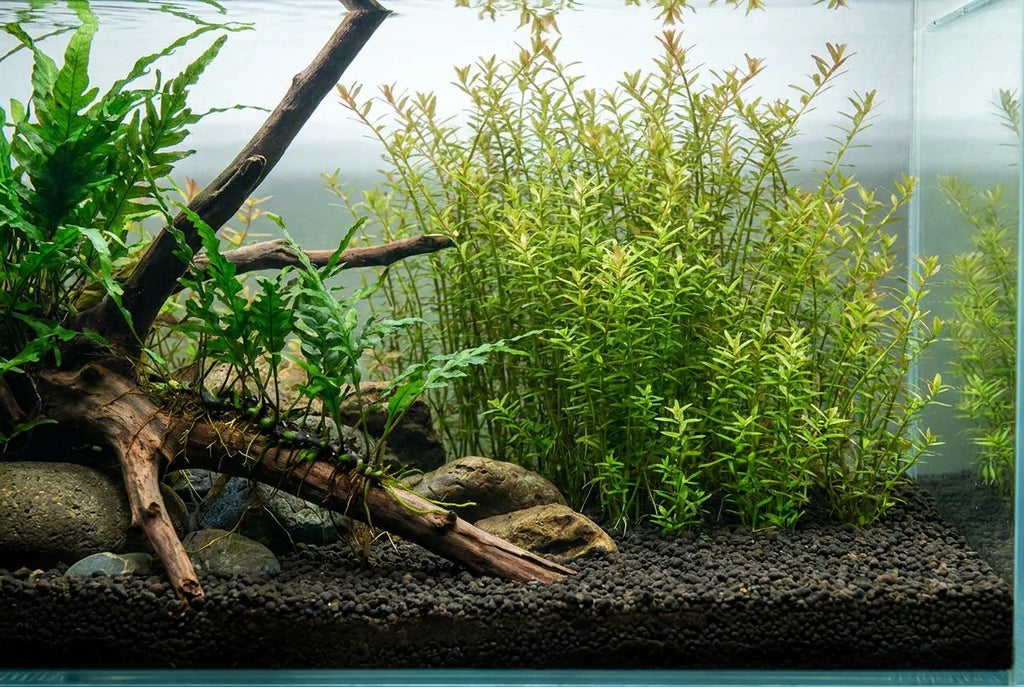
Roots or Leaves? How Aquarium Plants Actually Take Up Nutrients
Aquarium plants do not simply “feed from their roots.” Many can take up nutrients from both the substrate and the surrounding water. As a planted aquarium matures, roots spread, organic matter accumulates and nutrient pathways become increasingly interconnected.
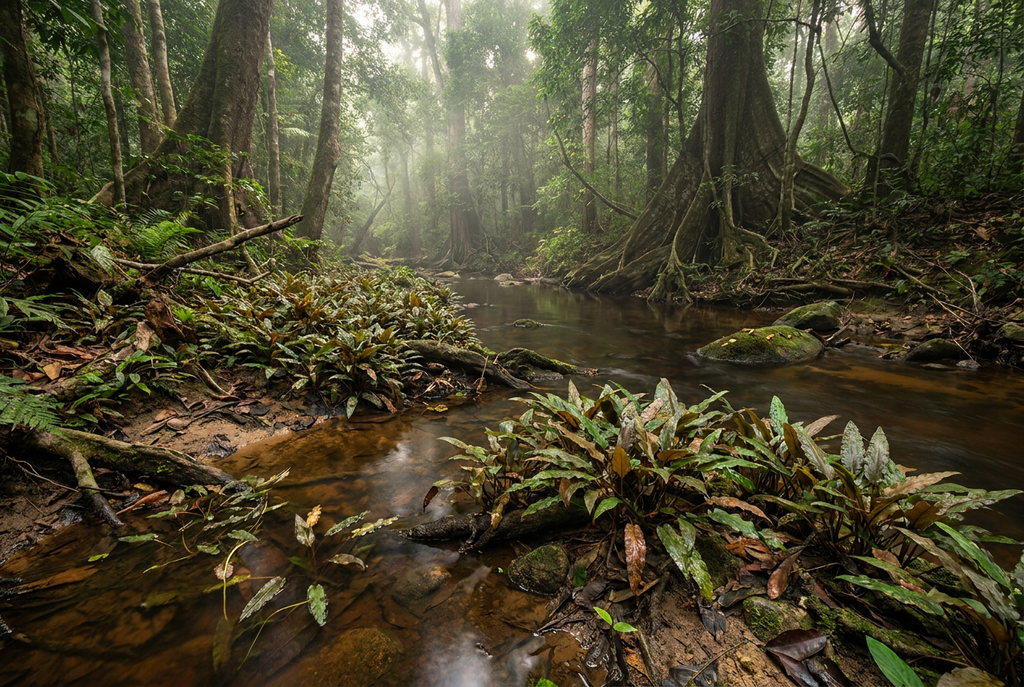
What is Cryptocoryne?
To most aquarium hobbyists, Cryptocoryne are simply “Crypts” — reliable planted tank plants with textured leaves and slow growth. But hidden beneath the waterline is one of the strangest botanical stories in tropical Asia. From flooded rainforest rivers and blackwater peat swamps to Victorian greenhouses and bizarre insect-trapping flowers, Cryptocoryne has a history far deeper than most aquarists realize.
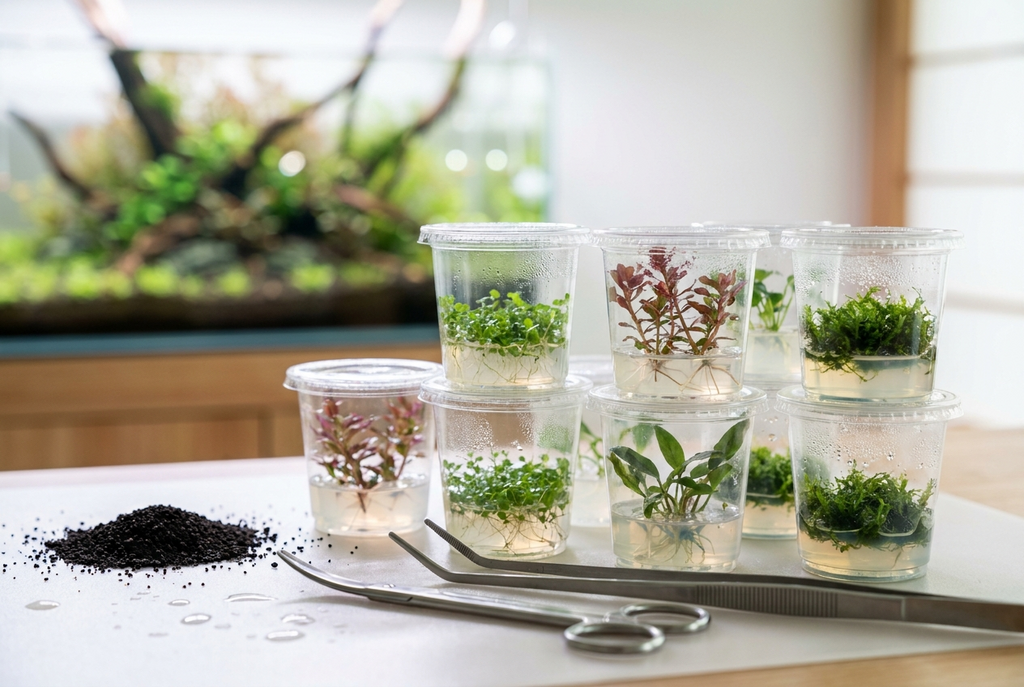
What Are Tissue Culture Aquarium Plants?
Tissue culture aquatic plants are clean, pest-free aquarium plants grown in sterile laboratory cups. Here’s how they are produced, why hobbyists use them, their pros and cons, and how to store them before planting.
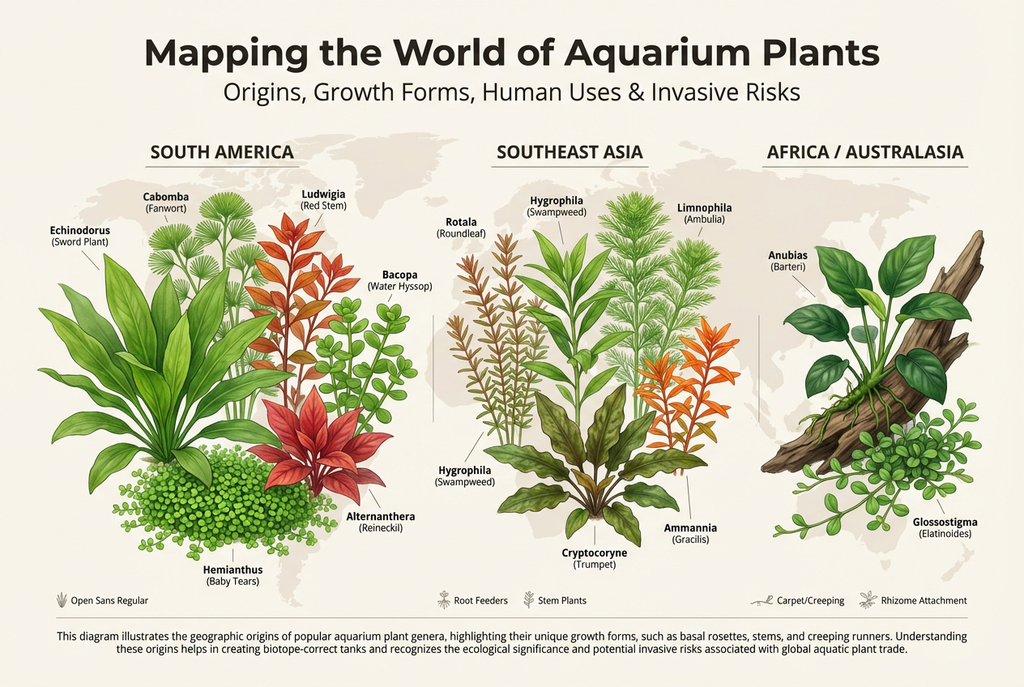
Mapping the World of Aquarium Plants
A complete guide to aquarium plant origins, growth types, and real-world uses. Discover how plants from South America, Southeast Asia, and Africa behave differently, how they adapt between emersed and submerged growth, and which species to use—or avoid in your aquarium or paludarium.
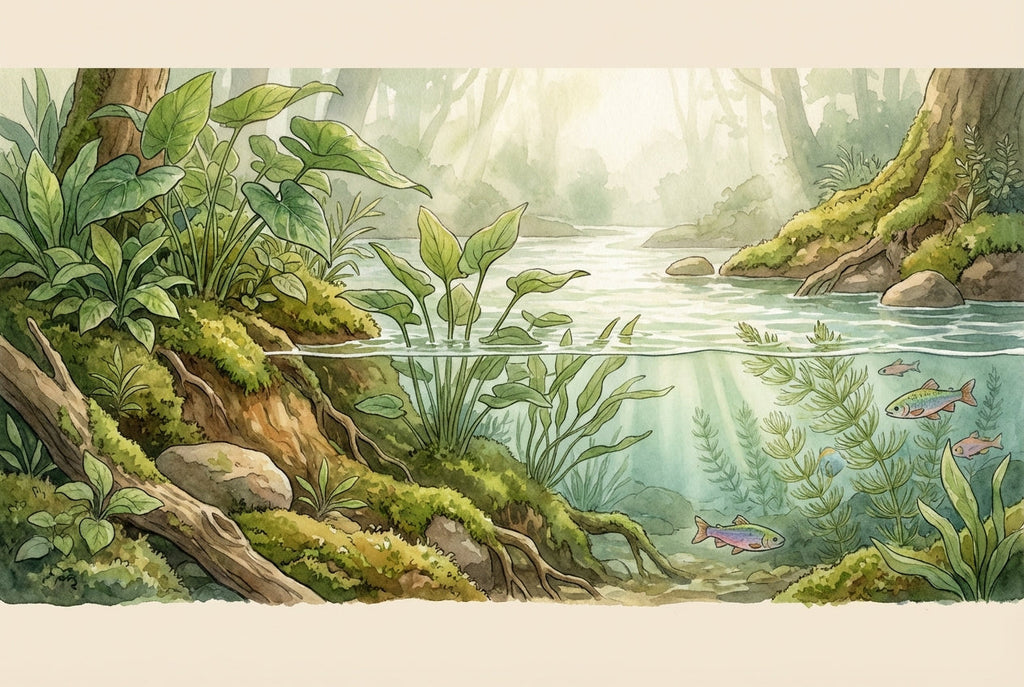
Why Aquarium Plants Change Form (Melt)
If you’ve ever bought aquarium plants and noticed them melting, changing shape, or looking completely different, you’re not doing anything wrong.
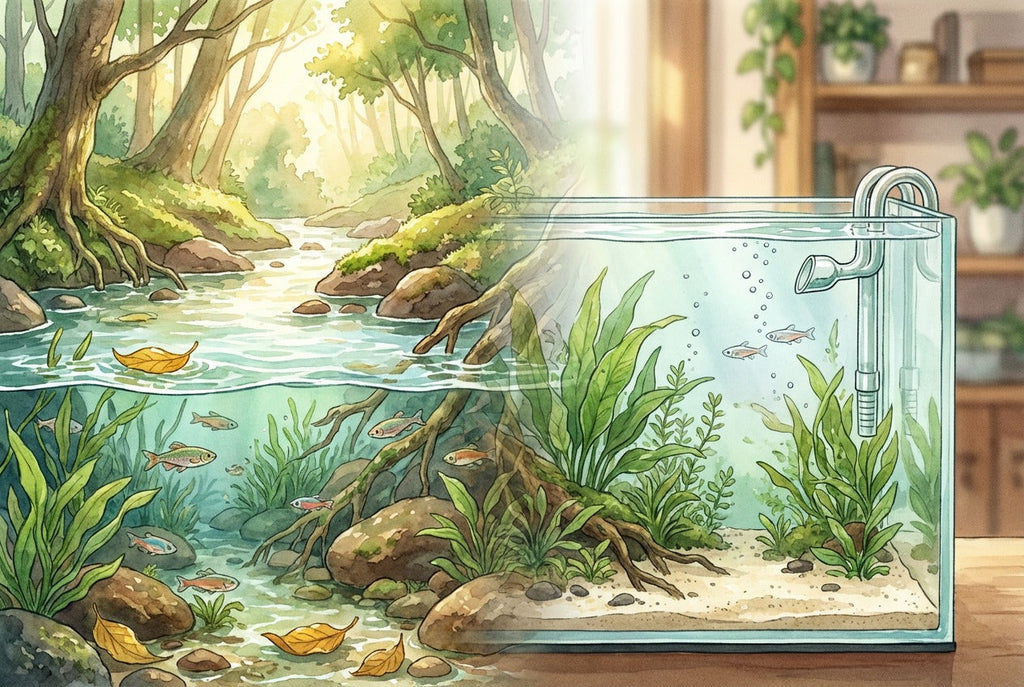
If Aquatic Plants Grow in Nature Without Fertiliser, Why Do We Need Fertiliser in Aquariums?
If you have ever seen aquatic plants growing in rivers or streams, you might wonder:
“Why do aquarium plants need fertiliser when plants in nature don’t?”
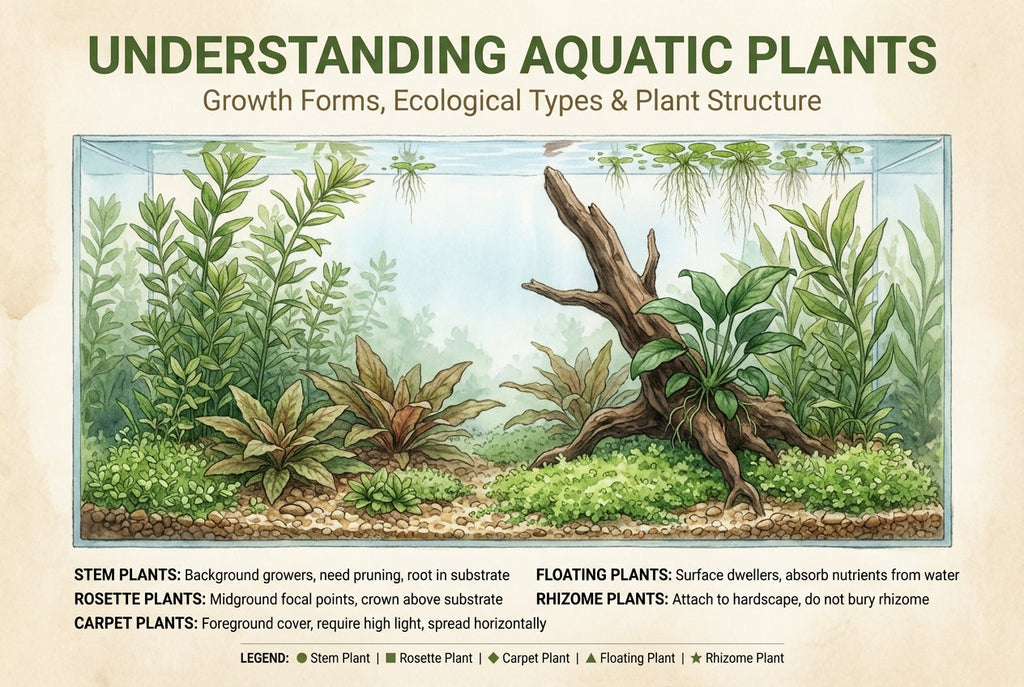
Understanding Aquatic Plants: Growth Forms, Ecological Types & Plant Structure
To properly understand aquatic plants, we classify them into three key categories:
- Growth Forms — how the plant grows
- Ecological Types — where the plant grows in nature
- Morphological Types — what the plant looks like


