
What Are Tissue Culture Aquarium Plants?
This guide is created by Green Chapter — Nature Workshop Studio, where we focus on creating living ecosystems through hands-on experience. We share practical insights across terrariums, aquascaping, plants, and natural systems to help you build and care for your own.
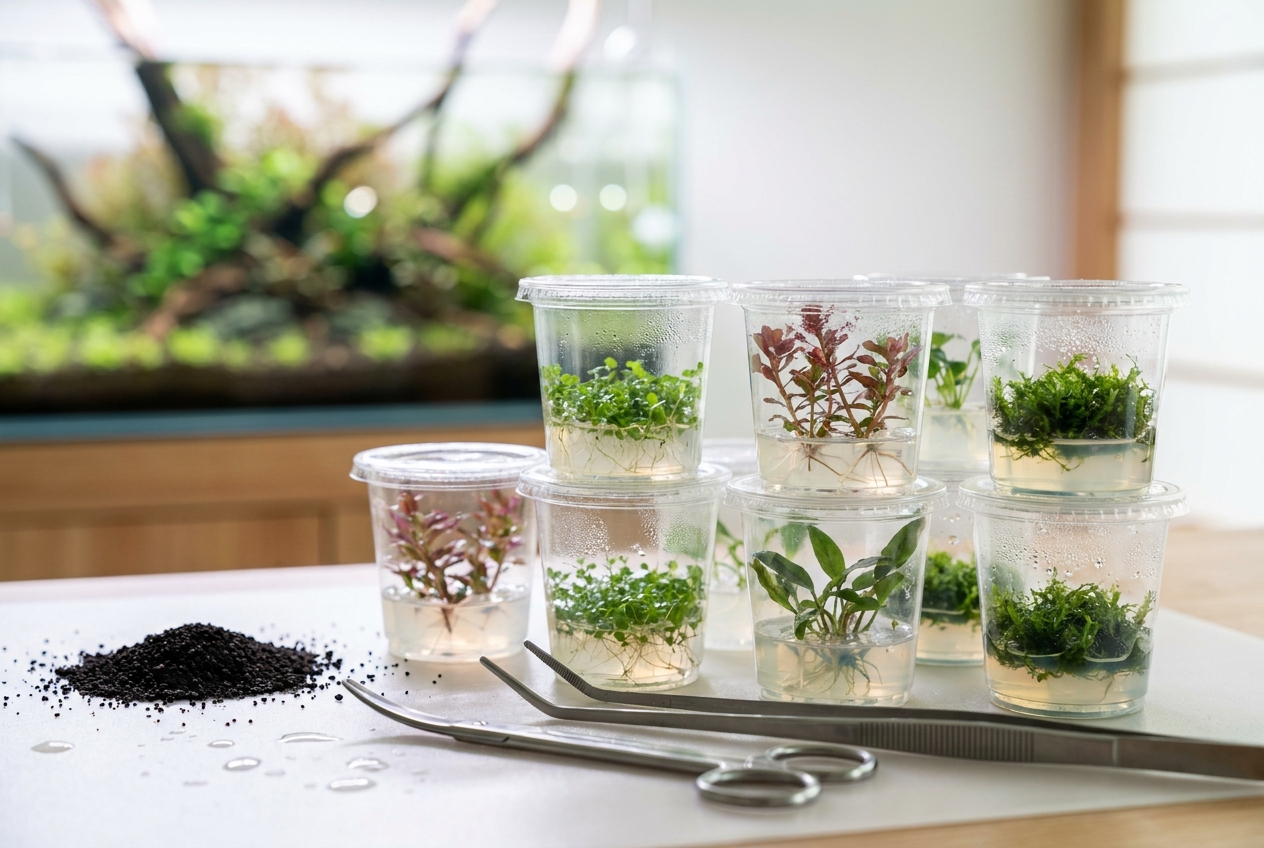
Tissue Culture, often shortened to TC, refers to aquatic plants grown in sterile laboratory conditions instead of traditional plant farms, pots, ponds, or greenhouse trays. These plants are usually sold in sealed plastic cups, with their roots and leaves growing inside a clear nutrient-rich gel.
For aquarium hobbyists, tissue culture plants are popular because they are clean, compact, and free from common hitchhikers such as pest snails, duckweed, algae spores, hydra, and other unwanted organisms. This makes them especially useful for shrimp tanks, nano aquariums, planted tanks, and aquascapes where cleanliness matters.
Although they look small in the cup, TC plants can grow into healthy full-size aquarium plants once they are planted correctly and given time to adapt.
How Tissue Culture Plants Are Produced
Tissue culture production begins with a tiny piece of plant tissue taken from a healthy mother plant. This small sample is called an explant. It may come from a growth tip, stem node, or other actively growing part of the plant.
The tissue is then sterilised to remove bacteria, fungi, algae, and pests. Once clean, it is placed into a sealed container filled with nutrient gel. This gel contains the minerals, sugars, and plant growth hormones needed to encourage the tissue to multiply.
Over time, the original tissue produces many small clones. These young plantlets develop leaves and roots inside the sterile cup. Once they are large enough, they are sealed and distributed to aquarium shops.

Why Hobbyists Like Tissue Culture Plants
The biggest advantage of tissue culture plants is that they are pest-free. Because they are grown in sealed sterile cups, they do not carry snails, duckweed, hydra, algae clumps, or hidden eggs from outdoor farms.
They are also safer for sensitive livestock. Traditionally farmed aquarium plants may sometimes carry pesticide residue, especially if they were grown emersed in commercial nurseries. TC plants avoid much of this risk, making them a good choice for shrimp keepers and delicate nano fish setups.
Another benefit is value. One cup often contains many tiny plantlets. When separated properly, a single cup can cover a wide area, especially for carpeting plants, foreground plants, mosses, and small epiphytes.
TC cups also transport well. The sealed cup keeps the plants moist, protected, and compact during shipping.

The Downsides of Tissue Culture Plants
Tissue culture plants are clean, but they are not magic plants. Most of them are grown emersed, meaning they are produced above water in humid conditions. Once planted underwater, they must adjust to submerged growth.
During this transition, some melting is normal. In the first two weeks, around 30% to 50% of the original emersed leaves may die back. This can look worrying, but the important thing is whether new submerged leaves begin to grow.
The tiny roots are also delicate. If planted too loosely, TC plants can float out of the substrate easily. This is why fine tweezers, small portions, and powder-type aquasoil are helpful.
Some demanding carpeting plants, such as Hemianthus callitrichoides ‘Cuba’ or Utricularia graminifolia, may also need stable CO2 to survive the transition well. Without CO2, they often melt heavily or fail to establish.

How To Prepare Tissue Culture Plants Before Planting
Before planting, remove the plant mass from the cup and rinse away all the agar gel. This step is important because leftover gel can rot in the aquarium and cause localised fungus or bacterial growth.
Use lukewarm water and rinse gently until the roots and leaves are clean. After that, divide the plant mass into small portions. For most cups, cutting the mass into 6 to 8 plugs with sharp aquascaping scissors is better than pulling everything apart by hand, because pulling can damage the fragile roots.
When planting, use fine tweezers and insert each plug deep enough into the substrate so it stays anchored. Fine powder aquasoil works much better than coarse gravel because it grips the tiny roots more securely.
During the first month, gentle liquid fertiliser dosing can help because the young plants are still developing their root systems and may absorb nutrients mainly through their leaves.

Should You Use the Dry Start Method?
For difficult carpeting plants, the Dry Start Method can be very useful. Instead of filling the aquarium immediately, the TC portions are planted into damp aquasoil and allowed to grow in a humid tank for several weeks before flooding.
This gives the plants time to anchor deeply and spread before they face the stress of underwater transition. It is especially helpful for tiny carpeting plants that easily float or melt when planted directly into a filled aquarium.
However, the Dry Start Method is not necessary for every plant. Many easy TC plants can be planted directly into a flooded aquarium as long as the tank is stable.

How To Choose Good Tissue Culture Cups
A healthy TC cup should have bright green plants, clear gel, and no bad smell. The plants should look fresh, compact, and alive.
Avoid cups where the leaves are yellow, brown, translucent, or collapsing. This usually means the nutrients in the gel are depleted or the plant has been sitting too long.
Also avoid cups where the gel has turned cloudy, watery, or liquefied. This can mean bacteria have entered the cup and the plants may already be rotting.

How To Store Tissue Culture Plants
If you cannot plant the TC cup immediately, keep it sealed and place it under normal room lighting or a standard desk light. Room temperature around 20°C to 25°C is suitable for short-term storage.
Do not place TC cups under strong direct sunlight, as heat can build up inside the sealed cup. Do not refrigerate them either, because most aquarium plants are tropical and cold storage can damage them.
Once the cup is opened, plant it as soon as possible. The sterile environment is broken after opening, and the gel can quickly become a place for mould or bacteria to grow.

Final Thoughts
Tissue culture aquatic plants are one of the cleanest ways to start or upgrade a planted aquarium. They are pest-free, livestock-safe, easy to transport, and often very good value because one cup can produce many plant portions.
Their main challenge is the transition period. Some melting is normal, and the tiny roots need careful planting. With clean preparation, stable aquarium conditions, and proper storage before use, TC plants can become strong, healthy aquarium plants for beginners and experienced aquascapers alike.


