
Are Snails Good for Aquarium Maintenance?
This guide is created by Green Chapter — Nature Workshop Studio, where we focus on creating living ecosystems through hands-on experience. We share practical insights across terrariums, aquascaping, plants, and natural systems to help you build and care for your own.
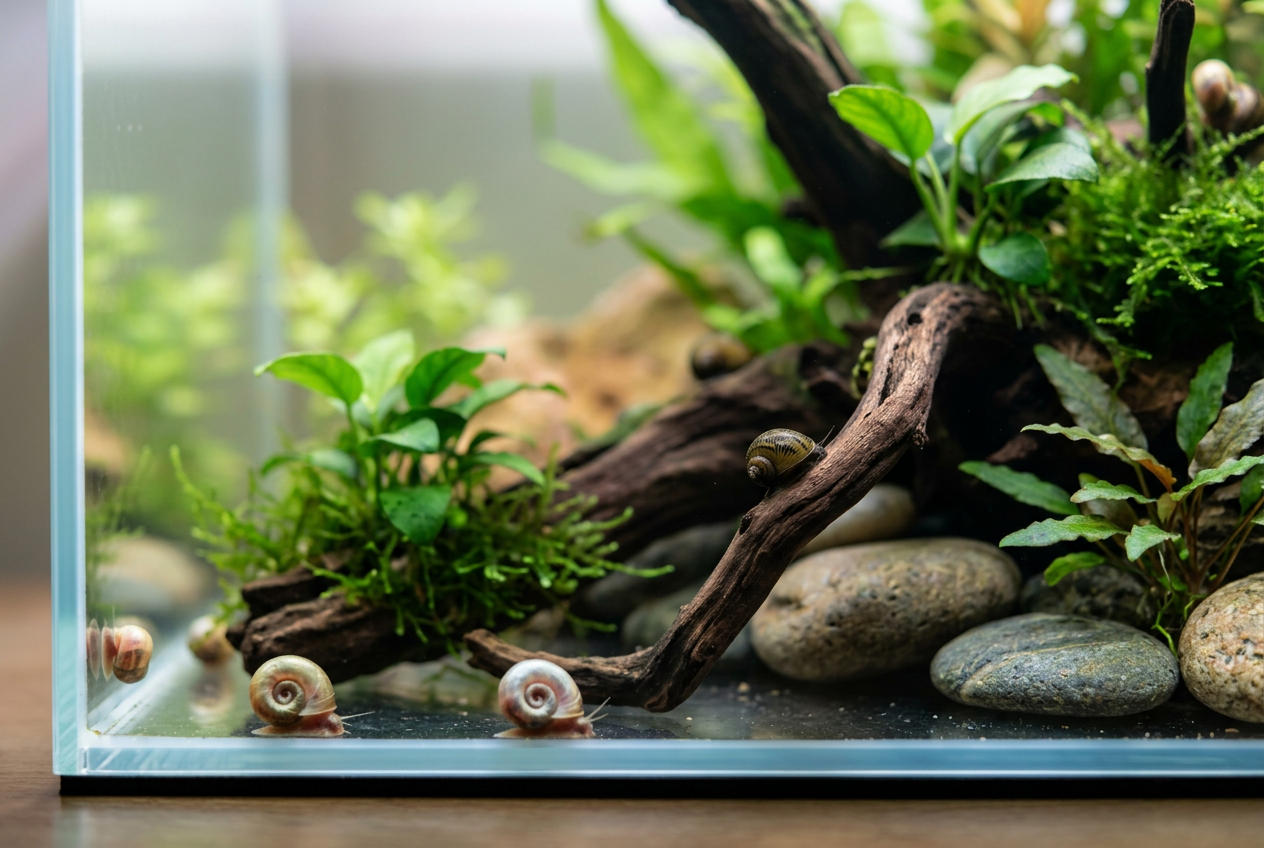
Are Snails Really Useful in a Tank?
A clean planted aquarium scene with visible snails on glass and hardscape, natural lighting, balanced ecosystem feel
Snails are often misunderstood. Some hobbyists see them as pests, while others rely on them as part of a balanced ecosystem.
The truth sits in between.
Snails are excellent support organisms in an aquarium. They help manage algae, break down organic waste, and keep certain areas of the tank active. But they are not a replacement for proper maintenance like water changes, filtration, and controlled feeding.
Think of them as a clean-up crew, not a full cleaning system.

What Do Snails Actually Do?
1. Algae Control
Close-up of snail grazing algae film on aquarium glass
One of the most visible benefits of snails is their ability to graze on algae. They constantly move across glass, hardscape, and leaves, feeding on algae film that builds up over time.
Species like Nerite snails are especially effective at removing stubborn algae, including green spot and diatoms, helping your tank look cleaner with less effort.
2. Substrate Aeration

Malaysian trumpet snail partially buried in substrate, showing natural burrowing behaviour
Not all snails stay on the surface. Malaysian Trumpet Snails (MTS) spend most of their time burrowing through the substrate.
This gentle movement prevents the substrate from compacting too tightly and helps release trapped gases, keeping the lower layers healthier—especially in planted tanks.
3. Waste Recycling

Snail feeding on uneaten fish food or soft decaying plant leaf
Snails consume uneaten fish food, decaying leaves, and organic debris that would otherwise rot in the tank.
By breaking these materials down, they make nutrients more accessible to beneficial bacteria and plants, contributing to a more stable ecosystem.
4. Natural Tank Indicator

Multiple small snails visible on aquarium glass indicating population increase
Snails quietly reflect the condition of your aquarium.
If you suddenly notice a large increase in their numbers, it often points to overfeeding or excess waste in the system. Instead of seeing this as a problem, treat it as a useful early warning sign.
The Downsides of Keeping Snails
Overpopulation

Dense cluster of small snails covering glass or hardscape
Certain species, such as ramshorn or bladder snails, reproduce quickly when food is abundant. Without control, their numbers can grow rapidly and become visually overwhelming.
Increased Bioload
A large number of snails produces waste. While a few individuals are beneficial, too many can increase the bioload and put pressure on your filtration system.
Visible Eggs

Small white Nerite snail eggs attached to driftwood or glass
Some species, like Nerite snails, lay small white eggs on hard surfaces. These eggs won’t hatch in freshwater, but they can be difficult to remove and may not appeal to everyone visually.
Recommended Snails for Maintenance
Nerite Snails

Detailed view of Nerite snail on glass or hardscape
Best for: Algae control on glass and surfaces
Nerite snails are one of the safest and most effective choices. They are strong algae eaters and, importantly, they do not reproduce in freshwater—making them ideal for controlled setups.
Mystery Snails

Large, colorful Mystery snail moving across substrate or glass
Best for: General scavenging
Mystery snails are larger, more visible, and often more interactive. They help clean up leftover food and soft plant debris while adding character to the tank.
Assassin Snails

Assassin snail approaching or feeding on another small snail
Best for: Controlling other snail populations
Assassin snails are carnivorous and feed on smaller snails. They are useful when you need to manage an overpopulation issue without chemicals.
Japanese Trapdoor Snails

Trapdoor snail on substrate or glass in a clean aquarium setup
Best for: Long-term, stable cleaning
These snails are hardy, slow-reproducing, and gentle. They are well suited for both aquariums and ponds, offering steady maintenance without sudden population spikes.
So… Should You Keep Snails?
Snails are one of the easiest ways to make your aquarium feel more balanced and self-sustaining.
They help reduce manual cleaning, recycle waste, and keep the system active. At the same time, they rely on you to maintain proper feeding habits and water quality.
When used correctly, they don’t replace your role—they support it.
Pro Tip
If you want the cleaning benefits without the risk of overpopulation:
Start with Nerite snails or a single Mystery snail. This gives you the benefits without introducing long-term population issues.
Final Thought
A healthy aquarium is not about eliminating work—it’s about building a system where every part plays a role.
Snails don’t replace you.
They simply make the system work with you, instead of against you.
Continue Learning
Aquarium snails are far more diverse than many hobbyists realise. Some reproduce explosively in freshwater, while others barely multiply at all. Some are excellent algae grazers, while others become indicators of excess waste and overfeeding. Understanding how different snail species behave helps you build a healthier, more balanced aquarium ecosystem.
Continue exploring these related freshwater aquarium guides:
- Why Some Aquarium Snails Multiply Like Crazy — While Others Never Reproduce
- How to Breed Rabbit Snails Successfully
- Why Nerite Snail Eggs Never Hatch in Freshwater
- How to Control Algae Naturally in Your Aquarium (Without Chemical)
- How to Control Aquarium Snail Population Naturally
- Are Snails Good for Aquarium Maintenance?
Each article explores a different part of freshwater aquarium ecology, helping Singapore hobbyists better understand snail behaviour, breeding patterns, algae control, ecosystem balance, and long-term planted tank stability.


