
What NOT to Put in Your Aquarium
This guide is created by Green Chapter — Nature Workshop Studio, where we focus on creating living ecosystems through hands-on experience. We share practical insights across terrariums, aquascaping, plants, and natural systems to help you build and care for your own.
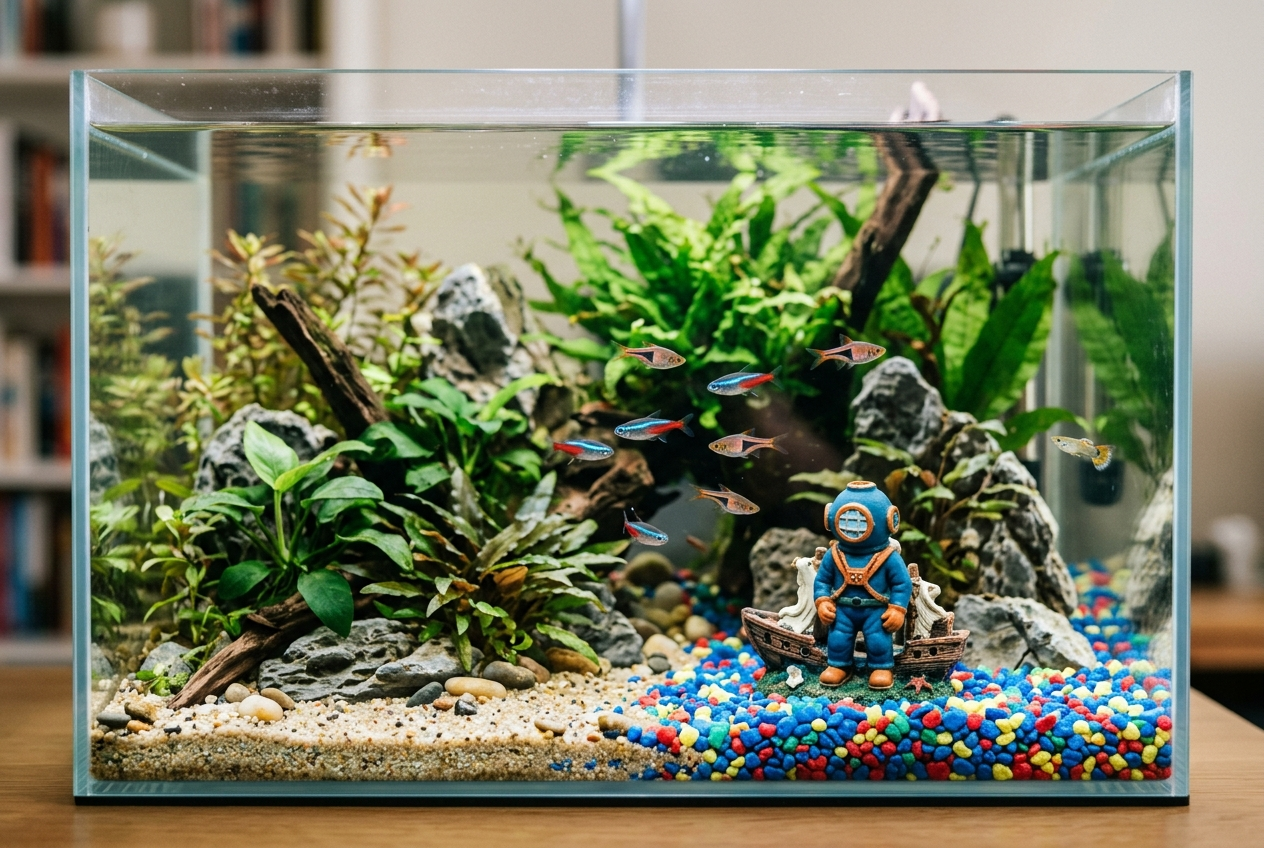
Not Everything That Looks Good Is Safe
When setting up an aquarium, it’s natural to want it to look interesting.
Many beginners add:
- Figurines
- Bright coloured stones
- Decorative objects
But some of these items can slowly affect your water without you realising.
The result isn’t immediate—but over time, it can harm your fish.
1. Dyed or Painted Materials
Bright colours can be appealing, but they often come with a hidden problem.
Dyed or painted items may:
- Release colour into the water
- Break down over time
- Introduce unwanted chemicals
This includes:
- Coloured gravel
- Dyed coral pieces
- Artificial decorations with paint coating
Even if it looks stable at first, the colour can slowly leach into your tank.

2. Household Items and Toys
It might seem harmless to place small objects or toys into your aquarium—but most are not designed for underwater use.
They may:
- Release chemicals
- Degrade over time
- Affect water quality
Even plastics can behave differently when submerged long-term.
If it’s not made for aquarium use, it’s safer to leave it out.

3. Coral Rocks in Freshwater Tanks
Coral and limestone are natural materials—but they are not suitable for every setup.
They can:
- Raise water hardness
- Increase pH levels
This may not be ideal for fish that prefer softer water, such as:
- Bettas
- Tetras
- Rasboras
Using the wrong material can slowly change your water conditions without you noticing.


