
When Is Your Tank Ready for Fish?
This guide is created by Green Chapter — Nature Workshop Studio, where we focus on creating living ecosystems through hands-on experience. We share practical insights across terrariums, aquascaping, plants, and natural systems to help you build and care for your own.
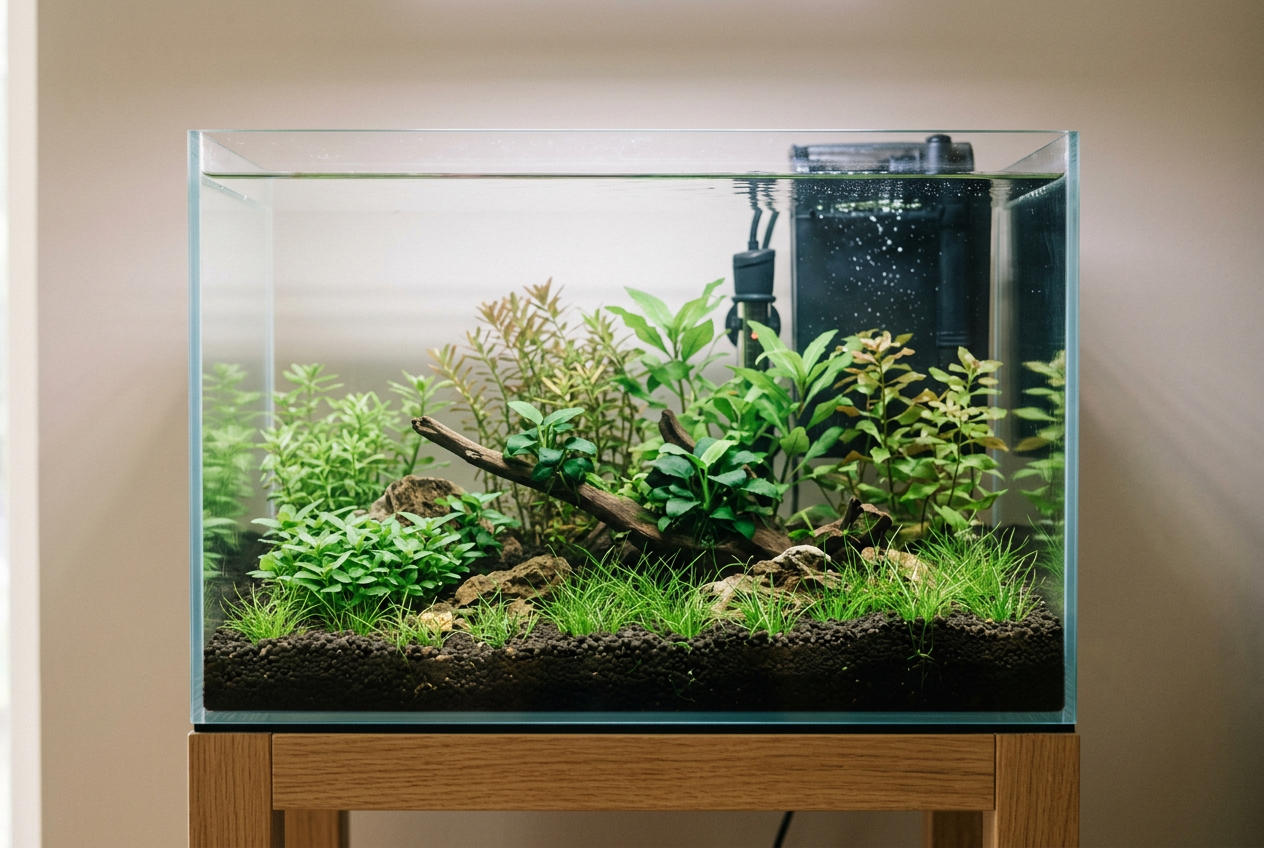
It Looks Ready… But It Isn’t
You’ve just set up your tank:
- Water is in
- Filter is running
- Plants are placed
Everything looks complete.
So naturally, the next question is:
“Can I add fish now?”
The answer is no—not yet.
What’s Missing: The Invisible System
A new tank is not empty—but it is not stable.
What’s missing is a population of beneficial bacteria that:
- Break down fish waste
- Convert toxic ammonia into safer compounds
Without this system, waste builds up quickly and becomes harmful—even if the water looks clean.

Why Adding Fish Too Early Causes Problems
When fish are added too soon:
- Waste starts building immediately
- Ammonia levels rise
- Fish become stressed or fall sick
This is why many beginners lose fish within the first few days—even when everything “looks fine”.
So When Is the Right Time?
There isn’t a single answer—but there is a safe progression you can follow.
Option 1 — Early Start (With Support)
You can add a small number of fish earlier if:
- You use a beneficial bacteria starter
- Your tank has plants
- You add very few fish
This usually happens around 1–2 weeks after setup.
But it requires restraint. Adding too many fish too quickly will still cause problems.
Option 2 — The Safer Beginner Approach
For most beginners, a better approach is to wait about 3–4 weeks.
By then:
- The filter system is more stable
- Bacteria has started to establish
- Water conditions are less volatile
You can begin adding fish slowly.

Option 3 — Fully Stabilised System (Best Practice)
The most reliable method is to wait until your tank is fully stabilised, then add fish gradually.
This gives:
- The highest survival rate
- Less stress for fish
- A smoother long-term experience
Even then, avoid adding everything at once.
Simple Signs Your Tank Is Ready
If you’re unsure, look for these signs:
- Water remains clear over time
- No strong or unusual smell
- Plants are adapting and holding shape
- No sudden cloudiness after a few days
These are not perfect indicators—but they help guide beginners.

A Simple Way to Think About It
Your tank is not just water—it’s a living system.
Adding fish too early is like:
- Moving into a house before it’s fully built
It might look ready, but it isn’t prepared to support life yet.
Final Thought
Patience at the start makes everything easier later.
By waiting just a little longer, you:
- Avoid common beginner losses
- Reduce stress on your fish
- Build a more stable system from day one
Continue Reading — Your Aquarium May Be Cycled, But The Ecosystem Is Still Developing
A planted aquarium does not become stable the moment ammonia and nitrite reach zero.
Experienced aquascapers rarely add every animal at once because different livestock play different roles during ecosystem stabilization. Snails help consume early biofilm, Amano shrimp assist with algae management, and sensitive species are often added much later after the aquarium matures biologically.
In the next guide, we explore:
-
which animals are typically introduced first,
-
why Amano shrimp often arrive before fish,
-
why Otocinclus are not true beginner algae eaters,
-
and how livestock succession helps stabilize a new planted aquarium over time.
→ Read Next:
The First Fish, Shrimp & Snails To Add Into a New Planted Aquarium


