
White’s Tree Frog Care Guide (Ranoidea caerulea)
This guide is created by Green Chapter — Nature Workshop Studio, where we focus on creating living ecosystems through hands-on experience. We share practical insights across terrariums, aquascaping, plants, and natural systems to help you build and care for your own.
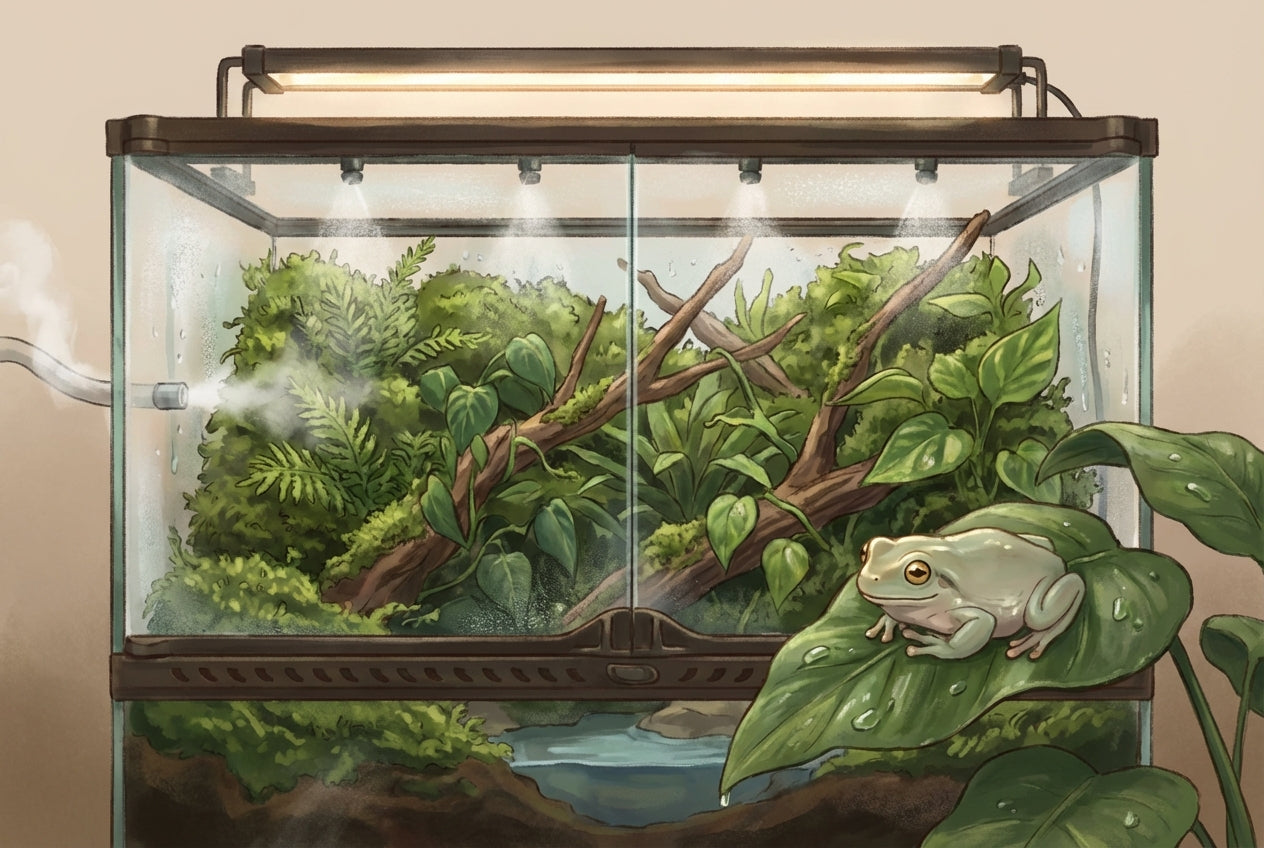
The Complete Terrarium Setup, Feeding & Maintenance Guide
ntroduction — Is White’s Tree Frog a Good Pet?
White’s tree frog (Ranoidea caerulea) is widely regarded as one of the best amphibians for beginners. It is calm, hardy, and adapts well to life in a terrarium when given the right conditions.
For hobbyists in Singapore, this species stands out as a suitable and manageable option compared to more delicate amphibians. However, success does not come from simplicity — it comes from building the right environment from the start.
This guide is designed to help you:
- Understand the frog’s natural habitat
- Build a proper terrarium system
- Choose the right equipment
- Maintain a clean and stable setup
Whether you are starting your first terrarium or upgrading an existing one, this article will serve as your complete reference.
Natural Habitat of White’s Tree Frog
White’s tree frogs originate from Australia and New Guinea, where they inhabit:
- Woodlands
- Forest edges
- Areas near water sources
These environments are humid but not constantly wet. There is airflow, daily drying cycles, and access to elevated resting areas.
They are arboreal, meaning they prefer to stay above ground, resting on branches and broad leaves during the day and becoming active at night.
Key Takeaway
Your terrarium should replicate:
- Vertical structure
- Moderate humidity (not swamp conditions)
- Good airflow
- Access to water

Best Terrarium Setup for White’s Tree Frog
Choosing Between Exo Terra vs MIUS Terrariums
When setting up a tree frog enclosure, your terrarium choice affects everything — from humidity control to maintenance effort.
Exo Terra Terrarium
- Reliable and widely used
- Good ventilation
- Some models include drainage
MIUS Rainforest Terrarium
- Built-in drainage system
- Designed for planted ecosystems
- Compatible with misting systems
- Easier long-term water management
Which Should You Choose?
For beginners, Exo Terra is a safe and proven option.
For planted, misted terrariums with drainage efficiency, MIUS offers a stronger system.
For Singapore’s humid climate, drainage becomes especially important to prevent waterlogging.

Step-by-Step White’s Tree Frog Terrarium Setup
A proper setup is built in layers and designed for both plants and animals.
1. Drainage Layer
Prevents water buildup and keeps the system stable.
2. Substrate Layer
Use moisture-retaining soil that does not become soggy.
3. Top Layer
Moss and leaf litter for humidity retention and natural aesthetics.
4. Hardscape
Use driftwood and branches to create vertical climbing structure.
5. Water Dish
Always provide clean water for hydration and soaking.
Think of your setup as a mini ecosystem, not just a container.

Humidity Control — Misting vs Fogger
White’s tree frogs require humidity cycles, not constant moisture.
Ideal Range:
- Day: 50–60%
- Night: 70–75%
Misting System (Recommended)
- Maintains consistent humidity
- Supports plants
- Cleans surfaces lightly
Fogger (Optional)
- Adds visual effect and short humidity boost
- Should not run continuously
Overly wet environments can lead to poor air quality and health issues.

Lighting Setup for Tree Frog Terrarium
Lighting supports both plant growth and environmental balance.
Recommended Setup:
- Arcadia Jungle Dawn LED (plant growth)
- Arcadia ShadeDweller UVB (gentle UV exposure)
This combination creates a natural light environment while allowing your frog to move between shaded and brighter areas.
Always design with light + shade zones, not full exposure.

Best Plants for White’s Tree Frog Terrarium
Choose plants that are:
- Strong
- Easy to maintain
- Able to support weight
Recommended Plants:
- Pothos
- Philodendron
- Monstera
- Aglaonema
These plants provide broad leaves for resting and help maintain humidity naturally.
Tip: Use hidden pots to prevent uprooting.

Feeding Guide for White’s Tree Frog
White’s tree frogs are insectivores and should be fed appropriately sized live insects.
Feeding Frequency:
- Juveniles → Daily
- Adults → Every 2–3 days
Important Rule:
Food should not be wider than the frog’s head.
Supplements (Recommended)
Use:
- Repashy Calcium Plus (main supplement)
Optional:
- Vitamin A supplement (occasional use only)
Proper supplementation ensures long-term health and prevents deficiencies.

Safe Handling of White’s Tree Frog
Handling should be kept to a minimum and only done when necessary.
White’s tree frogs have permeable skin, meaning they absorb substances directly from contact.
Always Use Clean, Wet Hands
- Rinse hands thoroughly
- Remove all chemicals or residue
- Keep hands damp
This protects the frog and prevents moisture loss.
Handling Tips
- Keep sessions short
- Avoid squeezing
- Let the frog move naturally
Hygiene
Always wash your hands after handling.
Best practice: Observe more, handle less.

Maintenance Guide
A clean terrarium keeps your frog healthy and reduces long-term issues.
Daily:
- Remove waste
- Check humidity and temperature
- Replace water
Weekly:
- Spot clean substrate
- Remove uneaten food
Every 2–3 Weeks:
- Clean drainage system
- Trim plants
- Rinse decor
Consistency is more important than deep cleaning.

Common Mistakes to Avoid
- Keeping enclosure constantly wet
- No drainage system
- Weak or unsuitable plants
- Poor ventilation
- Overfeeding
Balance is the key to success.

Final Thoughts — Building a Thriving Frog Ecosystem
White’s tree frogs are incredibly rewarding to keep when their environment is designed correctly.
Focus on:
- Drainage
- Airflow
- Structure
- Consistency
When these elements come together, your terrarium becomes a stable, living ecosystem rather than just a tank.

Relevant Links:
- Moss Terrarium Workshop
- Isopod Terrarium Setup Guide
- Planted Tank Beginner Guide
- Substrate Product Pages
- Lighting Product Pages
- Repashy Supplement Products


