
A Perfect Isopod Terrarium Layout
This guide is created by Green Chapter — Nature Workshop Studio, where we focus on creating living ecosystems through hands-on experience. We share practical insights across terrariums, aquascaping, plants, and natural systems to help you build and care for your own.
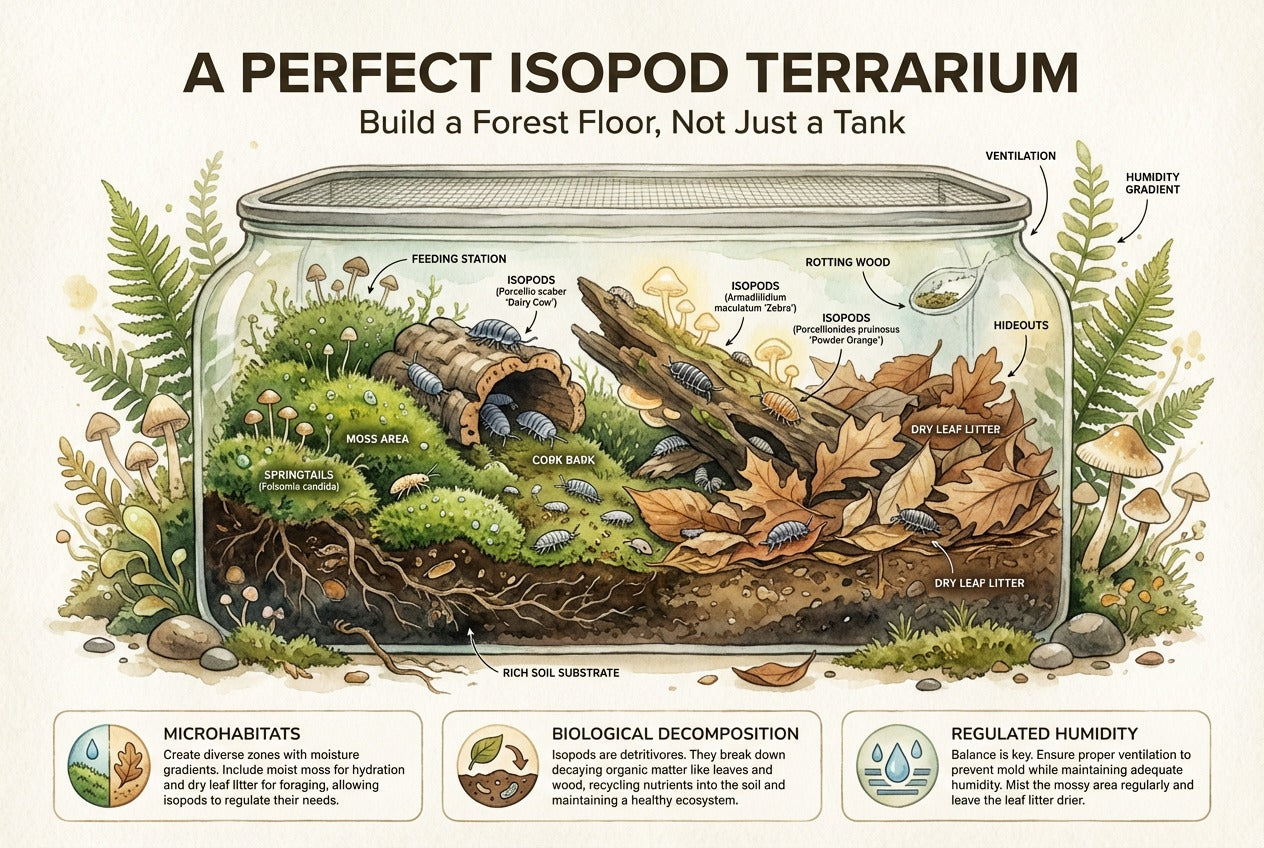
Build a Forest Floor, Not Just a Tank
Many beginners think isopods only need soil and food to survive. While they may survive short-term, they will only thrive and reproduce when their environment mimics the forest floor.
A proper isopod terrarium is not just a container — it is a mini ecosystem made of soil, leaf litter, wood, and moisture zones.
The goal is simple: recreate nature in a small space.
The Most Important Concept — Zones

In nature, isopods move between different areas depending on their needs. Your terrarium should allow the same behavior.
A good terrarium includes:
- Wet Moss Zone → for molting and breeding
- Dry Leaf Litter Zone → main food source
- Bark & Wood Zone → shelter and hiding
- Soil Zone → living and burrowing
- Calcium Area → shell development
- Feeding Area → supplemental food
These zones create a balanced micro-habitat, allowing isopods to regulate themselves naturally.
The Golden Rule — Moisture Gradient

Isopods need moisture to breathe, but too much water can harm them. The key is balance.
Golden Rule:
- 1/3 Moist Area (moss side)
- 2/3 Dry Area (leaf litter side)
Why this works:
- Moist area supports breathing, molting, and breeding
- Dry area prevents mold and bacteria buildup
- Isopods move between both areas as needed.
A balanced terrarium is never fully wet or fully dry.
Building the Ground — Terrarium Layers

Isopods live inside the soil, so the foundation matters.
Basic structure:
- Bottom (optional): drainage layer (LECA or gravel)
- Middle: main substrate (soil mix)
- Top: leaf litter and bark
- Surface: moss patches and wood
The substrate should be deep enough for burrowing and rich in organic material.
Substrate is not just soil — it is their home, food, and breeding ground.
The Perfect Substrate Mix

To replicate a forest floor, use a mix of:
- Organic soil
- Coco peat
- Leaf litter
- Rotten wood
- Sphagnum moss
- Charcoal
- Crushed eggshell (calcium)
Each component supports the ecosystem:
- Leaf litter and wood → food
- Moss → moisture
- Soil → structure
- Calcium → shell growth
This mix allows beneficial microbes to develop, creating a stable environment.
Shelter — Why Hiding Places Matter
Isopods are naturally shy and spend most of their time hidden.
Provide:
- Cork bark
- Wood pieces
- Leaf piles
These create safe areas for:
- Resting
- Molting
- Breeding
Without hiding places, isopods become stressed and less active.
Feeding Basics
Isopods mainly feed on natural materials in the terrarium.
Always present:
- Leaf litter (main food source)
Optional supplements:
- Vegetables (carrot, zucchini)
- Occasional protein (fish food)
Calcium (always needed):
- Eggshell
- Cuttlebone
Simple Maintenance Guide
| Task | Frequency |
|---|---|
| Mist moss area | 2–3 times per week |
| Add leaf litter | Every few weeks |
| Feed vegetables | Weekly |
| Add protein | Weekly |
| Provide calcium | Always |
Avoid overfeeding to prevent mold.
Final Summary — The Simple Formula
A successful isopod terrarium comes down to this:
Soil
+ Leaf Litter
+ Rotting Wood
+ Moss
+ Calcium
+ Hiding Places
+ Moisture Gradient
= Healthy Isopod Colony


