
Why Is My Moss Turning Brown? Understanding What Your Closed Terrarium Is Trying To Tell You
This guide is created by Green Chapter — Nature Workshop Studio, where we focus on creating living ecosystems through hands-on experience. We share practical insights across terrariums, aquascaping, plants, and natural systems to help you build and care for your own.
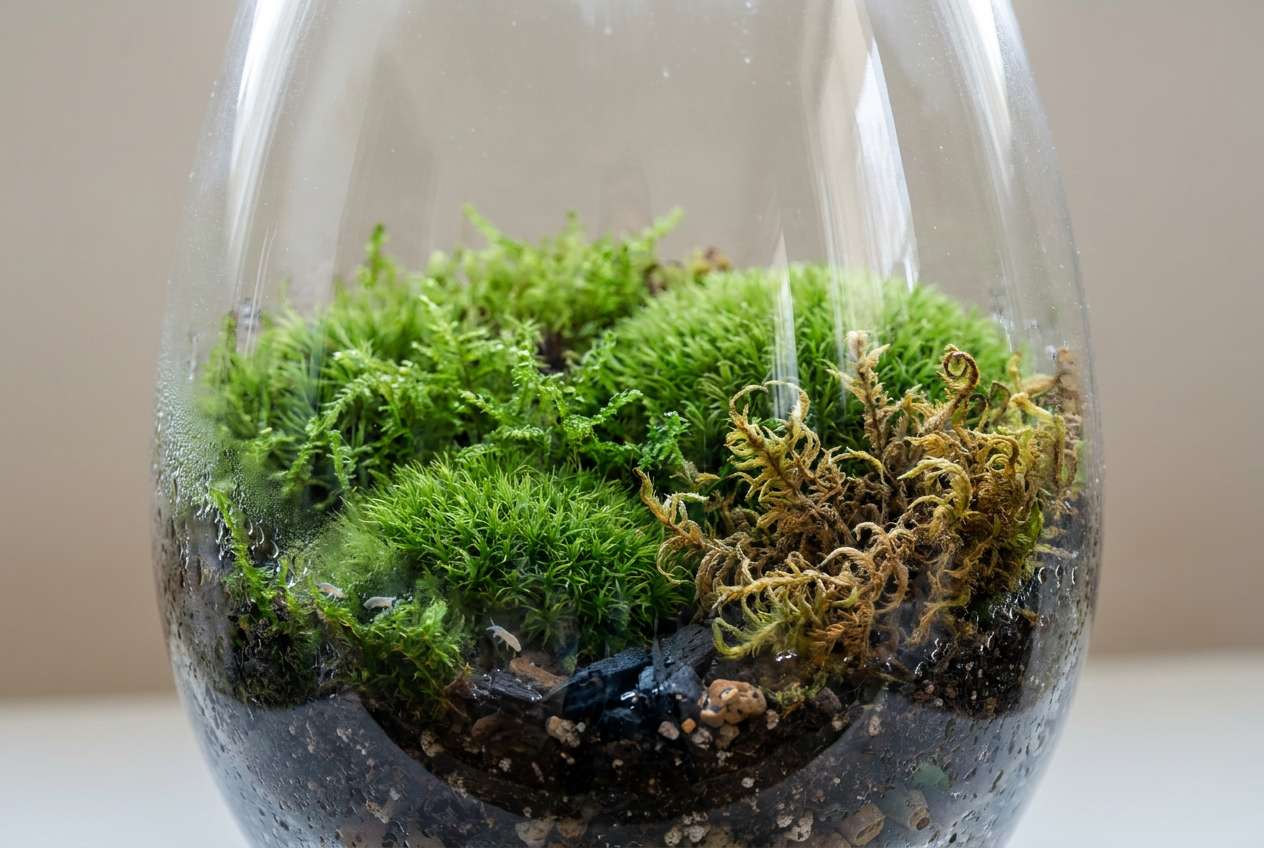
Brown moss is one of the most common problems new terrarium hobbyists notice.
At first glance, the answer seems simple: the moss must be too dry.
But in closed terrariums, that is not always true.
Moss can turn brown because it is too dry, but it can also turn brown because the terrarium is too wet, too hot, too stagnant, too bright, or slowly building up minerals from unsuitable water.
This is why adding more water is not always the correct first response.
A closed terrarium is not just a container with plants inside. It is a small living environment where moisture, light, heat, oxygen, microbes, and plant health are all connected.
When moss begins turning brown, it is usually giving you an early warning that something inside the system is out of balance.
Brown Moss Does Not Always Mean “Not Enough Water”

Many beginners see brown moss and immediately mist the terrarium again.
Sometimes that helps.
Sometimes it makes the problem worse.
Dry moss usually feels crispy, brittle, light, and shrunken. It may look pale brown or faded, especially around exposed edges.
Overwatered or rotting moss feels soft, dark, slimy, or mushy. It may collapse into itself or develop an unpleasant smell.
These two problems look similar from a distance, but they need opposite solutions.
Dry moss needs careful rehydration.
Rotting moss needs less stagnant moisture, better airflow, and removal of dead material.
Why Closed Terrariums Can Still Dry Moss Out

A terrarium can look wet while the moss is still stressed.
This happens because sealed glass traps heat very easily.
When a closed terrarium receives direct sun or strong lighting, water evaporates quickly and condenses on the glass. From the outside, the terrarium looks humid and healthy.
But inside, the moss may be experiencing heat stress.
Heavy condensation does not always mean the moss is comfortable. It may mean the terrarium is overheating.
This is why moss near windows, bright afternoon sun, or strong grow lights can brown even when the glass looks foggy.
Moss Prefers Cool, Shaded, Stable Conditions

Most mosses used in terrariums naturally grow in shaded, humid, and relatively cool environments.
They often live on forest floors, damp stones, rotting wood, shaded soil, or tree bases where moisture is present but heat is buffered by canopy cover.
They do not enjoy hot sealed glass containers.
Good moss conditions usually include:
- bright but indirect light
- stable humidity
- cooler temperatures
- gentle moisture cycling
- fresh gas exchange
When these conditions are missing, the moss may slowly fade, brown, or collapse.
Constant Wetness Can Cause Rot

Moss enjoys humidity, but it does not want to sit in stagnant, soaking water all the time.
When the bottom layer stays too wet, oxygen becomes limited. This encourages bacterial and fungal activity around the moss.
The moss may darken, soften, and slowly decay.
This is especially common when:
- too much water was added during setup
- there is no drainage layer
- the substrate stays swampy
- the container is never aired out
- dead plant matter is left to rot
- springtails are absent or too few
- In this case, more misting will not fix the problem.
- The terrarium needs to dry slightly and breathe.
Poor Airflow Can Weaken Moss Over Time

Closed terrariums do not need constant ventilation like open plant pots, but they still benefit from occasional air exchange.
When air becomes too stagnant, moisture sits heavily on every surface. Mold, biofilm, and decay organisms can build up faster.
Opening the lid for a few hours can help reset the environment.
This is especially useful when you notice:
- constant fogging all day
- mold patches
- sour or earthy bad smell
- slimy moss
- soft collapsing plant matter
Airing out does not mean the terrarium has failed. It is part of maintenance.
Harsh Light Burns Moss Slowly
IMAGE 6 INSERT: Educational lighting comparison showing moss under soft indirect light, filtered morning light, and harsh direct afternoon sun.
Moss does best with bright, indirect light.
Direct sun is one of the fastest ways to damage a closed terrarium because glass intensifies heat buildup.
Harsh lighting may cause moss to become:
- pale
- yellowish
- crispy
- brown at the tips
- dry in exposed areas
If the terrarium is near a window, avoid strong midday or afternoon sun.
If using artificial light, keep the light moderate and avoid placing it too close to the glass. For many closed terrariums, a controlled photoperiod is better than leaving lights on all day.
Water Quality Can Damage Moss

Moss absorbs water directly through its surface.
This makes it more sensitive to water quality than many common houseplants.
Repeated use of tap water can sometimes lead to mineral buildup, especially in areas with harder water.
Chlorine, chloramine, dissolved salts, and minerals may slowly stress the moss and leave deposits on glass or plant surfaces.
For closed terrariums, safer water choices include:
- distilled water
- RO water
- filtered water
- clean rainwater, if collected safely
This is not about making the terrarium complicated. It is about preventing long-term buildup in a sealed system where excess minerals do not easily wash away.
Some Mosses Are Simply Not Suitable Long Term

Not every moss adapts well to a closed terrarium.
Some mosses naturally grow in cooler outdoor environments, on exposed rocks, tree bark, or areas with stronger airflow and seasonal drying.
When placed inside a warm sealed container, they may stay green for a while before slowly declining.
This is why two terrariums can receive similar care but perform very differently depending on the moss species used.
A suitable terrarium moss should tolerate:
- high humidity
- low airflow
- stable indoor temperature
- indirect light
- consistent moisture
If the moss keeps browning despite correct care, the issue may be species suitability rather than your maintenance.
Should You Remove Brown Moss?

Yes, if the moss is clearly dead, slimy, blackened, or decaying.
Dead moss can encourage mold, bacterial growth, and unwanted biofilm inside a closed terrarium.
Remove:
- slimy brown patches
- blackened moss
- foul-smelling sections
- collapsed dead cushions
moss that lifts away easily with no green growth underneath
If only the top has browned but the base remains green, you may trim lightly and observe whether new growth returns.
Healthy green portions can be left in place.
How To Stabilize Moss Again

The goal is not to keep moss constantly wet.
The goal is to create a stable moisture cycle.
For dry, crispy moss:
- move it away from harsh light
- mist or rehydrate gently with clean water
- increase humidity gradually
- check if the terrarium is overheating
- For wet, mushy moss:
- stop misting temporarily
- open the lid for a few hours
- remove rotting sections
- allow the substrate surface to dry slightly
- improve cleanup crew activity if suitable
For light-stressed moss:
- move to bright indirect light
- avoid afternoon sun
- reduce artificial light duration
- increase distance from strong grow lights
- For water-quality stress:
- switch to distilled, RO, or filtered water
- avoid repeated tap water misting
- wipe mineral deposits from the glass
- monitor future browning at moss tips
Bring It All Together

Brown moss is rarely caused by one simple mistake.
It is usually the result of several small stresses building up over time.
Too much heat, too much stagnant moisture, poor airflow, unsuitable water, harsh lighting, or the wrong moss species can all lead to browning.
The best response is not to panic and add more water immediately.
First, observe the moss texture.
Then check the environment.
A healthy closed terrarium should feel humid, but not swampy. Bright, but not hot. Sealed, but not permanently stagnant.
Once you understand the difference, moss becomes easier to read.
It stops being just decoration and becomes one of the clearest indicators of whether your miniature ecosystem is truly balanced.


