
My Terrarium Is Foggy But The Moss Keeps Drying
This guide is created by Green Chapter — Nature Workshop Studio, where we focus on creating living ecosystems through hands-on experience. We share practical insights across terrariums, aquascaping, plants, and natural systems to help you build and care for your own.
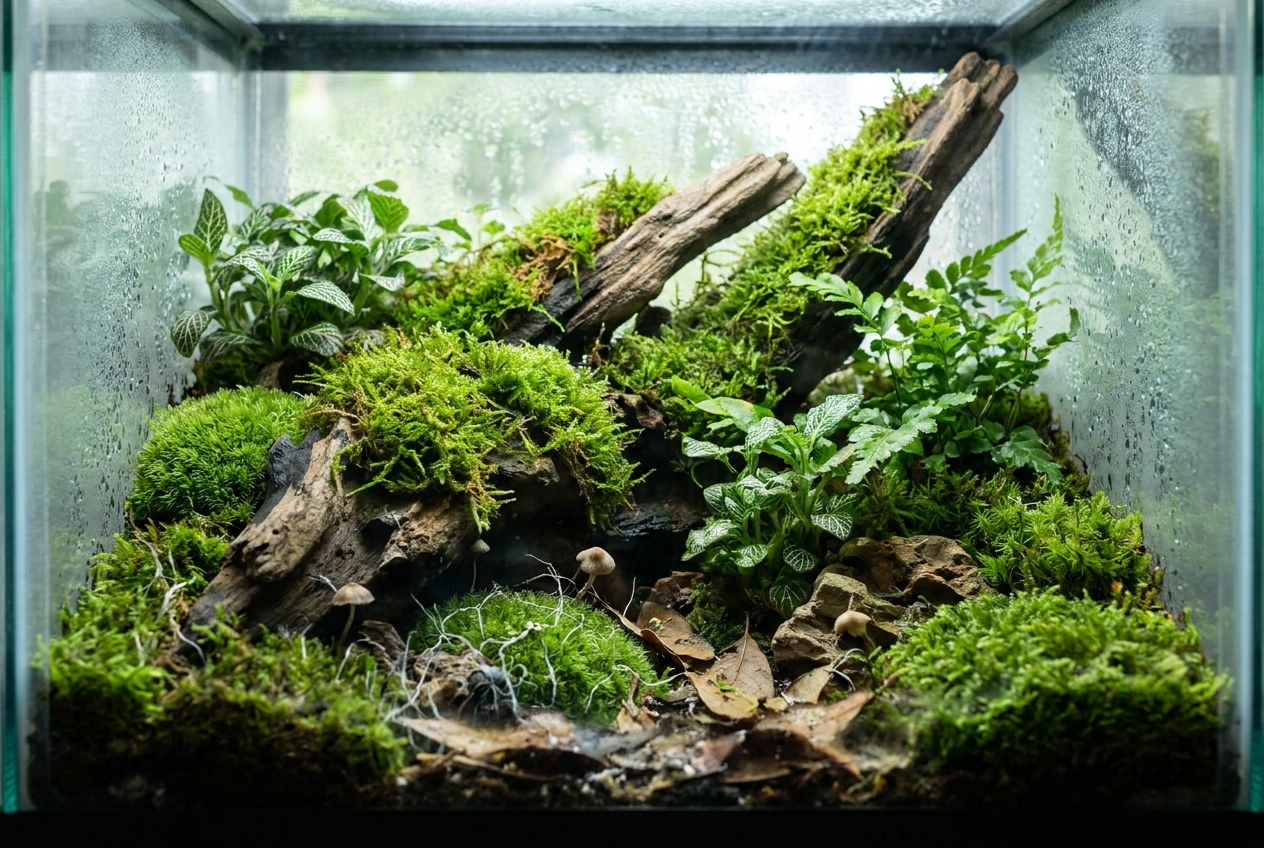
One of the most confusing moments for beginner terrarium hobbyists is this:
The glass is completely fogged up.
There are water droplets everywhere.
The tank looks extremely humid.
But somehow the moss inside is still turning brown, crispy, or shrinking away from the hardscape.
At first glance, this feels impossible.
Most people assume:
“If there’s condensation, the moss should be healthy.”
In reality, moss problems inside terrariums are usually more complicated than simply “not enough water.” In many cases, the terrarium is actually too hot, too stagnant, or too wet in the wrong way.
Understanding this difference is one of the biggest turning points for new hobbyists.
Condensation Does Not Automatically Mean Healthy Moss

Condensation only proves one thing:
water exists somewhere inside the system.
It does not guarantee:
- proper moss hydration
- healthy airflow
- stable temperatures
- breathable substrate conditions
Many beginners unknowingly create sealed environments that behave more like overheated greenhouses than rainforest floors.
When strong lighting or direct sunlight heats the glass, water rapidly evaporates and sticks to the cooler surfaces. The terrarium becomes visually “wet,” but the internal conditions may actually be stressful for moss.
This is why some tanks stay permanently fogged while the moss slowly declines over weeks.
The Most Common Problem Is Usually Heat

In most beginner terrariums, browning moss is caused more by heat stress than lack of humidity.
Moss naturally prefers:
- cool temperatures
- stable moisture
- gentle airflow
- indirect lighting
It does not enjoy:
- trapped heat
- direct afternoon sun
- strong grow lights too close to the glass
- constantly steaming conditions
A terrarium can look extremely humid while simultaneously overheating the moss inside.
Common warning signs include:
- heavy daytime fogging
- upper moss turning crispy
- brown patches near the light source
- glass becoming warm to the touch
- moss shrinking away from rocks or wood
This is especially common in sealed jars placed near windows.
Moss Does Not Like “Boiling Jar” Conditions

A healthy terrarium usually does not stay fully fogged 24 hours a day.
This surprises many beginners.
In nature, moss experiences:
- moisture cycles
- evaporation
- airflow
- cooling periods
- fresh oxygen exchange
When a terrarium becomes permanently stagnant:
- fungal films begin developing
- biofilm appears on surfaces
- oxygen circulation weakens
- moss tissue starts deteriorating
Many experienced hobbyists actually:
- crack open the lid periodically
- wipe excess condensation
- allow occasional airflow
- reduce overheating
- avoid over-misting
The goal is not maximum fog.
The goal is stable balance.
Some Mosses Simply Struggle In Sealed Terrariums

Not all moss species adapt well to indoor terrarium conditions.
A lot of commercially sold moss:
- comes from cooler outdoor environments
- grew under natural airflow
- experienced seasonal humidity changes
- was never adapted for sealed tropical tanks
This is why some mosses slowly decline even when beginners follow “correct” humidity advice.
Forest-collected mosses often struggle long-term in:
- hot indoor rooms
- enclosed jars
- stagnant air
- intense LED lighting
Tropical adaptable mosses usually perform better in closed terrarium systems.
Brown Moss Does Not Always Mean Dry Moss

Another beginner misconception is assuming all brown moss is dehydrated.
Sometimes the moss is actually:
- overheating
- rotting internally
- suffocating underneath
- breaking down from stagnant moisture
Wet moss can still die.
In heavily sealed systems, the bottom layers may remain constantly soaked while the upper surface appears dry and crispy.
This creates confusing symptoms where the terrarium looks humid but the moss still deteriorates.
Your Substrate Still Matters

Even though moss absorbs moisture mainly through its surface, the substrate underneath still plays a huge role.
If the substrate dries too quickly:
- humidity swings become unstable
- moss attachment weakens
- surface hydration becomes inconsistent
If the substrate stays permanently waterlogged:
- oxygen disappears
- fungal growth increases
- moss bases begin decomposing
Healthy terrarium substrate should feel:
- cool
- lightly damp
- breathable
- never muddy or swampy
Water Type Helps — But It Is Usually Not The Main Problem

Distilled water, rainwater, or RO water are generally safer for moss long-term.
Tap water may contain:
- chlorine
- chloramine
- mineral buildup
Over time, these can stress delicate moss species.
However, beginners often blame water quality too early.
In reality, lighting and temperature problems are usually much more damaging than tap water itself.
What A Healthy Moss Terrarium Usually Looks Like

A healthy moss terrarium usually feels:
- cool
- lightly humid
- stable
- breathable
The glass may fog slightly during certain times of day, but it should not look like a permanently steamed-up sauna.
Healthy moss systems usually have:
- indirect lighting
- moderate humidity
- occasional airflow
- balanced substrate moisture
- stable temperatures
Many beginners accidentally chase “maximum humidity” when they should actually be chasing stability.
Before You Throw The Moss Away

Partially browned moss does not always mean the entire colony is dead.
Sometimes:
- the lower sections remain alive
- new growth appears later
- conditions simply need adjustment
Before replacing everything:
- reduce overheating
- move away from direct sunlight
- improve airflow slightly
- reduce constant fogging
- allow the terrarium to stabilize for a few weeks
Terrariums often improve slowly rather than instantly.
The Biggest Beginner Realization

The biggest realization for many hobbyists is this:
A terrarium can be wet and unhealthy at the same time.
Moss does not simply want “more water.”
It wants:
- balance
- stable moisture
- breathable conditions
- cooler temperatures
- gentle humidity cycles
Once beginners stop chasing maximum condensation and start understanding environmental balance, moss care becomes much easier.


