
Why Algae Appears on Terrarium Glass
This guide is created by Green Chapter — Nature Workshop Studio, where we focus on creating living ecosystems through hands-on experience. We share practical insights across terrariums, aquascaping, plants, and natural systems to help you build and care for your own.
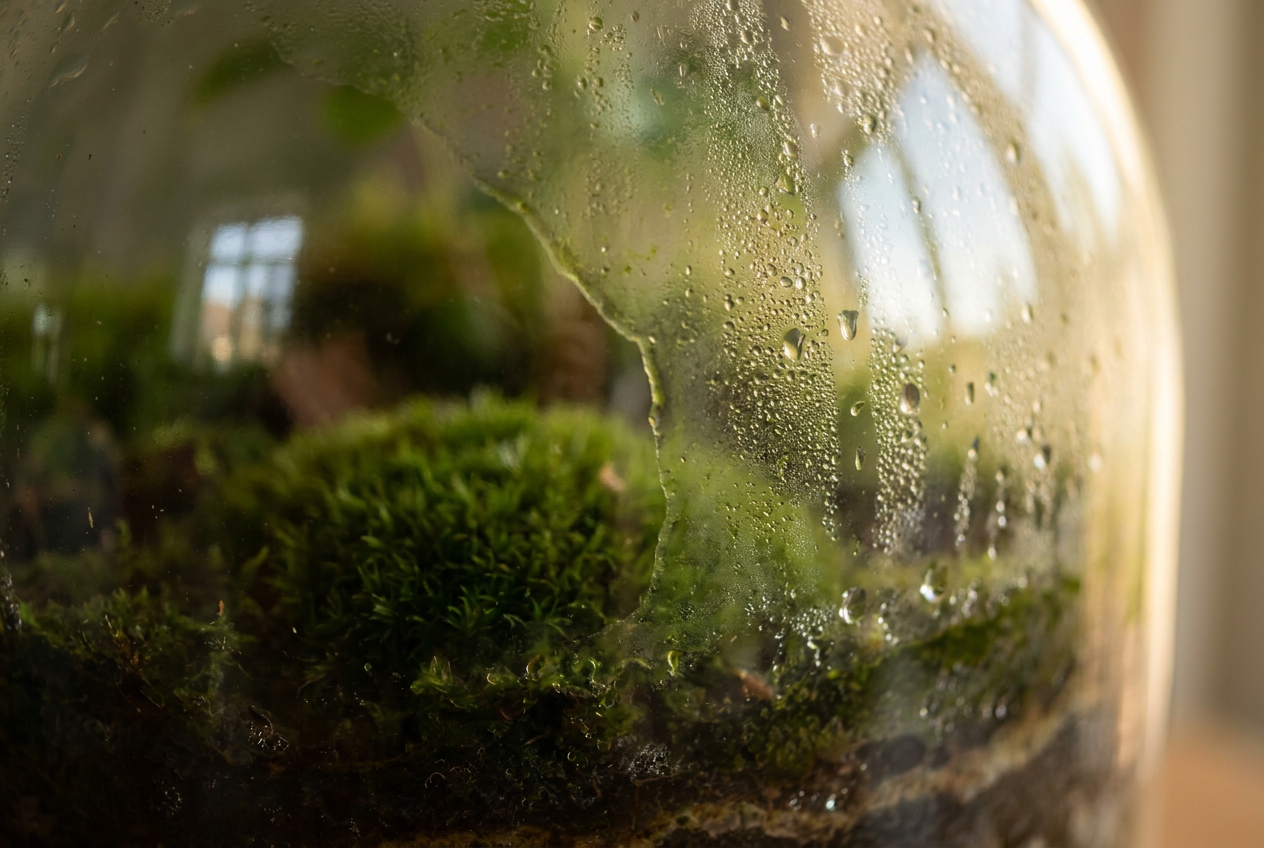
Algae is one of the earliest lifeforms to appear when moisture, light, and nutrients combine inside a humid environment. In a terrarium, glass surfaces often become the perfect place for algae spores to settle and multiply.

Most beginner terrariums unintentionally create extremely algae-friendly conditions:
• long hours of light exposure
• excessive condensation
• stagnant humid air
• decaying organic matter
• nutrient-rich wet surfaces
Once microscopic algae spores land on damp glass, they begin forming thin green biofilms. Over time, this develops into visible green haze, streaking, or cloudy patches that reduce visibility into the terrarium.
In many cases, algae is not actually a dangerous problem. It is often simply an indicator that the terrarium ecosystem is becoming too wet, too bright, or too nutrient-rich.
The important distinction is this:
A small amount of algae is normal in living ecosystems.
Heavy recurring algae growth usually means the terrarium environment is drifting out of balance.
Algae Is Often a Symptom, Not the Real Problem

Many hobbyists focus only on cleaning the algae itself.
The algae returns because the environmental conditions that caused it were never corrected.
In closed terrariums, algae outbreaks are usually connected to a broader ecosystem imbalance involving moisture, airflow, temperature, and decomposition.
Common underlying causes include:
• Terrariums placed under direct sunlight
• Grow lights running too long
• Constantly saturated substrate
• Excess fertilizer residue
• Rotting leaves or dead moss trapped inside
• Poor airflow in permanently sealed containers
• Excessive organic waste from overfeeding bioactive systems
Terrariums are small enclosed ecosystems with limited buffering capacity. Small environmental mistakes accumulate much faster than in open pots or aquariums.
A terrarium that constantly looks fogged over is often not “healthy humid” — it may actually be overheated and stagnant.
Understanding the Difference Between Healthy Humidity and Stagnant Moisture

One of the biggest beginner misunderstandings is assuming that more condensation automatically means a healthier terrarium.
Healthy terrariums usually cycle through humidity changes naturally.
You may see:
• light morning condensation
• partial clearing during the day
• moderate humidity retention
• occasional airflow exchange when opened
Unhealthy terrariums often remain permanently fogged with thick wet glass all day long.
This creates several problems:
• reduced oxygen exchange
• overheating under light exposure
• fungal growth acceleration
• algae biofilm expansion
• moss stress and decline
When water continuously coats the glass surface, algae gains a permanent wet surface to colonize.
Terrariums should feel humid — not swampy and suffocating.
Light Is One of the Biggest Hidden Triggers

Algae absolutely thrives on excessive light.
Many terrariums are accidentally placed near windows where they receive concentrated heat and intense sunlight for several hours daily.
Closed glass containers act like miniature greenhouses. Even mild sunlight can dramatically raise internal temperatures.
This combination of:
• trapped humidity
• warmth
• nutrient-rich moisture
• bright light
creates perfect algae-growing conditions.
For most moss terrariums, the ideal setup is:
• bright indirect light
• filtered morning light only
• stable temperatures
• shorter artificial lighting cycles
If using grow lights, many terrariums only require around 6–8 hours daily.
Running lights for 12–14 hours often benefits algae more than the plants themselves.
Why Moss and Algae Compete With Each Other

Mosses prefer moist air, but many species dislike constantly waterlogged surfaces.
When conditions become overly wet and stagnant, algae can begin outcompeting moss in certain areas.
Algae spreads rapidly because:
• it reproduces extremely quickly
• it needs minimal structure
• it colonizes smooth wet surfaces easily
• it tolerates stagnant moisture better than many moss species
This is why some terrariums slowly shift from:
lush moss ecosystem → green slimy glass ecosystem.
The moss itself may not die immediately, but the overall visual clarity and ecological balance gradually decline.
The Safest Way to Remove Algae From Terrarium Glass

Mechanical removal is usually the safest method.
Good tools include:
• bent aquascaping tweezers
• microfiber cloth
• soft paper towel
• cotton swabs for corners
Use distilled or dechlorinated water whenever possible.
Avoid:
• soap
• strong vinegar solutions
• glass cleaners
• alcohol sprays
• harsh scrubbing pads
Chemical residues can damage sensitive mosses, springtails, soil bacteria, and microfauna inside the ecosystem.
Gentle physical cleaning combined with environmental correction is far more effective long-term.
Springtails and Microfauna Help Stabilize the Ecosystem

Bioactive terrariums naturally develop cleanup systems.
Springtails are especially valuable because they consume:
• mold
• decaying organic matter
• fungal films
• microscopic waste buildup
While they do not magically erase thick algae coatings, they help reduce the excess organic buildup that indirectly fuels algae growth.
Healthy microfauna populations often create noticeably more stable terrarium conditions over time.
This is one reason mature terrariums frequently become more stable after several months once the ecosystem settles biologically.
When Algae Becomes a Warning Sign

Small algae patches are normal.
However, heavy recurring algae growth combined with other symptoms may indicate deeper problems:
• rotting substrate smell
• slimy moss
• fungus outbreaks
• blackened plant bases
• persistent fogged glass
• overheating
• declining moss color
At this stage, the terrarium may require broader intervention:
• longer airing periods
• partial substrate drying
• reducing light exposure
• removing decaying organic material
• trimming dying plants
• rebuilding airflow balance
Trying to endlessly wipe the glass without correcting these factors usually leads to constant recurrence.
Building a More Stable Long-Term Terrarium

Stable terrariums are usually surprisingly moderate systems.
They are:
• humid but not flooded
• bright but not overheated
• moist but not stagnant
• biologically active but not overloaded
The healthiest terrariums often develop gentle environmental rhythms instead of remaining permanently sealed and untouched forever.
In reality, most successful closed terrariums still benefit from occasional ecosystem management:
• light trimming
• airflow resets
• moisture correction
• removing decaying material
• glass cleaning when needed
A terrarium is not a perfectly sealed machine.
It is a living ecosystem that slowly changes over time.
Understanding those changes is what allows long-term stability.
Bring It All Together

Algae on terrarium glass is rarely just a “dirty glass problem.”
It is usually the ecosystem telling you something:
• there is too much light
• too much trapped moisture
• too little airflow
• or too much decomposing organic material accumulating inside
Cleaning the glass helps temporarily.
Balancing the ecosystem solves the issue long-term.
Once you begin observing terrariums as living environmental systems instead of sealed decorations, problems like algae become much easier to understand — and prevent.


