
Moss Attachment Methods for Terrariums & Paludariums
This guide is created by Green Chapter — Nature Workshop Studio, where we focus on creating living ecosystems through hands-on experience. We share practical insights across terrariums, aquascaping, plants, and natural systems to help you build and care for your own.
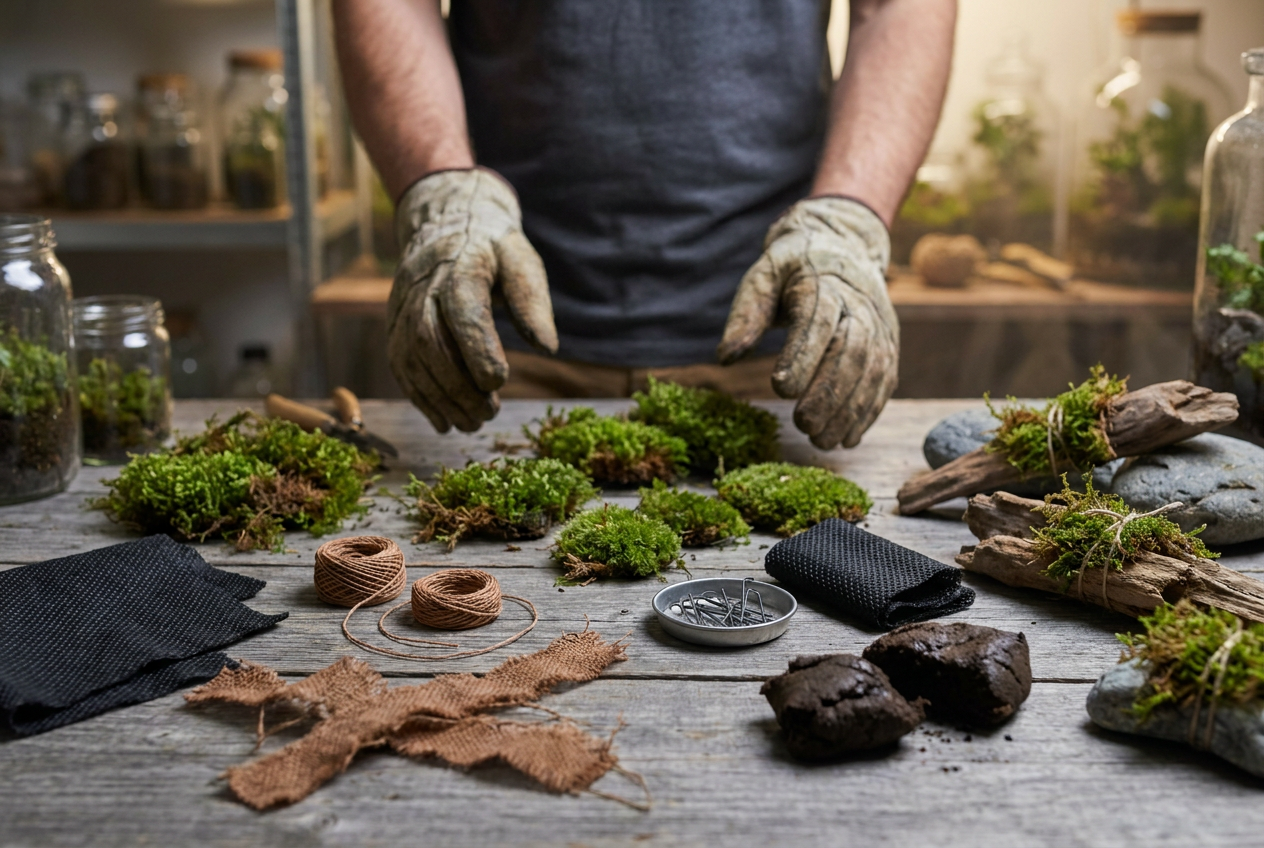
Why Moss Often Falls Off or Dies
Many beginners assume moss will naturally attach itself onto hardscape immediately after placement.
In reality, moss often struggles because:
- the surface dries too quickly,
- humidity is inconsistent,
- the moss has poor surface contact,
- or the attachment method does not suit the environment.
Some mosses can eventually anchor themselves naturally over time, but during the early establishment phase they usually need:
- physical support,
- moisture stability,
- and consistent surface contact.
Different hardscape surfaces also behave differently.
For example:
- driftwood dries differently from rock,
- vertical walls behave differently from horizontal surfaces,
- and humid moss walls require different techniques compared to submerged aquascapes.
This is why experienced terrarium and paludarium hobbyists often use different attachment systems depending on the type of environment they are building.
Moss Cotton
Best for Driftwood & Branch Attachment

Moss cotton is one of the most traditional and beginner-friendly ways to secure moss onto driftwood and branches.
The cotton thread is wrapped around:
- moss,
- roots,
- or wood surfaces,
holding the moss tightly against the hardscape until it naturally anchors itself over time.
This method works especially well for:
- driftwood branches,
- aquascaping wood,
- tree-root layouts,
- and natural branch systems.
One major advantage is that the thread becomes far less visible over time as the moss spreads and grows.
Moss cotton is commonly used when:
- the environment already has stable humidity,
- the hardscape remains naturally damp,
- or the moss only needs temporary support while attaching itself.
Terra Tape - Moisture-Guiding Wrap Systems
Best for Humid Transition Zones & Branch Systems

Some attachment systems do more than simply hold moss in place.
Moisture-guiding wraps help:
- secure moss,
- distribute moisture,
- and create stable humid growing surfaces at the same time.
These systems are especially useful:
- above waterlines,
- along paludarium branches,
- around humid transition zones,
- and across surfaces that would otherwise dry too quickly.
Because the material itself helps carry moisture, moss can continue receiving hydration even when positioned slightly away from direct water contact.
This creates:
- living branch systems,
- humid moss pathways,
- and biologically active transition surfaces.
These wraps are commonly used in:
- paludariums,
- ripariums,
- waterfall layouts,
- and humid branch ecosystems.
Hygrolon - Moisture-Distributing Wall Surfaces
Best for Moss Walls & Vertical Backgrounds

For larger humid environments, broader moisture-distributing surfaces are often used instead of narrow wraps.
These systems are designed to:
- spread water across wider areas,
- support creeping moss growth,
- stabilize humidity,
- and create living wall surfaces over time.
They are especially useful for:
- vertical paludarium walls,
- moss backgrounds,
- humid cliff systems,
- and larger planted surfaces.
As moisture spreads across the surface, moss gradually colonizes the wall and transforms it into a biologically active humid environment.
These systems are commonly paired with:
- foggers,
- misting systems,
- drip walls,
- and humid waterfall zones.
GeoPins
Best for Foam Walls & Temporary Moss Securing

GeoPins are commonly used for securing moss directly onto:
- foam walls,
- humid backgrounds,
- and vertical terrarium surfaces.
These small U-shaped pins help press moss firmly against the surface while it establishes itself.
They are especially useful because:
- moss can be repositioned easily,
- installation is fast,
- and the pins remain relatively hidden once the moss spreads.
GeoPins are often used during:
- early wall setup,
- moss propagation,
- and humid background establishment.
Many hobbyists combine GeoPins together with:
- misting systems,
- foam walls,
- or moisture-retaining surfaces.
Peat Clay
Best for Stone Crevices & Naturalistic Walls

Peat clay is commonly used when hobbyists want moss to appear naturally embedded into rock surfaces and cliff systems.
Instead of tying moss externally, peat clay helps create:
- planting pockets,
- moisture-retaining crevices,
- and textured growing surfaces.
This method is especially useful for:
- rocky cliff walls,
- vertical hardscape,
- naturalistic backgrounds,
- and waterfall-style layouts.
Because peat clay blends visually into the hardscape, the final result often looks more natural compared to visible tying methods.
The clay also helps retain moisture around the moss during the establishment phase.
Choosing the Right Moss Attachment Method
Different methods work better for different environments.
| Method | Best For | Moisture Support | Common Use |
|---|---|---|---|
| Moss Cotton | Wood & branches | Low | Temporary attachment |
| Terra Tape | Transition zones & branches | High | Humid branch systems |
| Hygrolon | Vertical walls & backgrounds | High | Moss walls & humid surfaces |
| GeoPins | Foam walls | Depends on setup | Temporary wall securing |
| Peat Clay | Rock crevices & cliff systems | Moderate | Naturalistic embedding |

Final Thoughts
Successful moss growth inside terrariums and paludariums is usually less about glue or tying techniques alone, and more about:
- stable moisture,
- surface contact,
- humidity consistency,
- and long-term environmental balance.
Different attachment systems simply help create the right conditions for moss to establish itself more successfully over time.
Once the environment stabilizes, the hardscape slowly transforms from decorative surfaces into living ecosystems.


