
Poison Dart Frogs — Rainforest Jewels with a Dangerous Secret
This guide is created by Green Chapter — Nature Workshop Studio, where we focus on creating living ecosystems through hands-on experience. We share practical insights across terrariums, aquascaping, plants, and natural systems to help you build and care for your own.
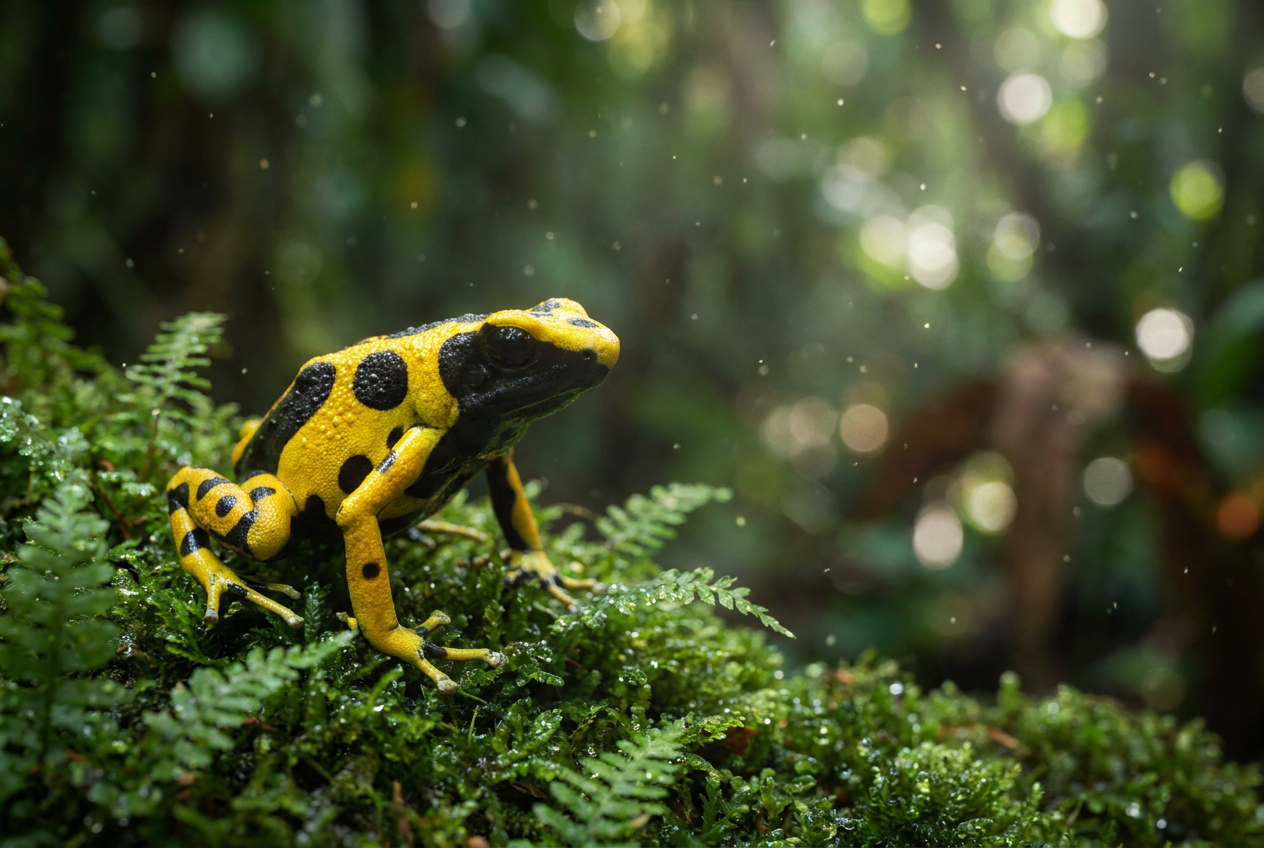
Some animals survive by hiding.
Poison dart frogs do the opposite.
Covered in glowing blues, fiery oranges, bright yellows, and electric greens, these tiny rainforest amphibians almost seem designed to be noticed. Their colors are so intense that they often look unreal in photographs — more like fantasy creatures than living animals.
But these colors are not for beauty alone.
In nature, they are warnings.
Poison dart frogs are among the most toxic amphibians in the world, and their vivid coloration tells predators exactly that:
“Do not touch.”
While poison dart frogs are illegal to keep privately in Singapore, they remain extraordinary animals to learn about through conservation exhibits and zoolical collections. Visitors may occasionally encounter them through rainforest and amphibian displays at places such as:
- Singapore Zoo
- Mandai Wildlife Reserve
- Cloud Forest
Beyond their striking appearance, poison dart frogs also play an important role in rainforest ecosystems and conservation education.
What Exactly Are Poison Dart Frogs?
“Poison dart frog” is a general term used for a group of brightly colored tropical frogs native to Central and South America.
Many belong to genera such as:
- Dendrobates
- Phyllobates
- Oophaga
- Ranitomeya
These frogs are usually very small, with many species measuring only:
- 2–5 cm long
Despite their size, they are active daytime hunters that spend much of their lives exploring rainforest floors, climbing mossy branches, or hiding among bromeliads and leaf litter.
Unlike many frogs that rely on camouflage, poison dart frogs evolved bold colors to advertise danger.
This type of warning coloration is known as:
Aposematic Coloration
In nature, bright colors often signal:
- toxicity
- venom
- foul taste
- danger
Their appearance acts as a survival strategy long before predators ever attempt an attack.
Where Do They Live?
Poison dart frogs inhabit warm, humid tropical rainforests across:
- Colombia
- Brazil
- Peru
- Ecuador
- Panama
- Costa Rica
They thrive in environments that are:
- constantly humid
- densely planted
- shaded from direct sunlight
- rich in insects
- filled with moss, roots, and decaying leaves
Some species remain close to the forest floor, while others live higher among bromeliads and epiphytic plants where rainwater collects in tiny natural pools.
These microhabitats are incredibly important for breeding and tadpole development.

Why Are They Poisonous?
The poison dart frog’s toxicity is one of the most fascinating survival adaptations in the amphibian world.
Their skin contains alkaloid toxins that can deter or even kill predators.
However, scientists discovered something particularly interesting:
The frogs themselves may not naturally produce all of these toxins.
Instead, much of their toxicity appears linked to their wild diet.
In the rainforest, poison dart frogs feed on:
- ants
- termites
- mites
- tiny beetles
- springtails
- miniature arthropods
These prey items contain alkaloid compounds which gradually accumulate within the frog’s skin glands.
Over time, the frog effectively becomes chemically defended through its diet.
Captive-bred poison dart frogs in other countries often lose much of their toxicity because they no longer consume the same rainforest insects found in the wild.

The Frog That Became Legendary
One species became particularly famous for its extreme toxicity:
Golden Poison Frog
Native to Colombia, this species is considered one of the most toxic vertebrates on Earth.
Indigenous communities historically used toxins from certain poison frog species to coat hunting darts used in blowguns — which is how the common name “poison dart frog” originated.
Not all poison dart frogs were used this way, and not all species possess the same toxicity levels.
Some are highly toxic.
Others are comparatively mild.
But together, they became one of the rainforest’s most iconic examples of chemical defense.
Tiny Frogs with Remarkably Complex Behaviors
Despite their small size, poison dart frogs display surprisingly advanced parenting and social behaviors.
Many species:
- establish territories
- communicate through calls
- perform courtship rituals
- guard eggs
- transport tadpoles individually
Some frogs even carry tadpoles on their backs through the rainforest to tiny pools of water hidden inside bromeliads.
In certain species, females later return to feed developing tadpoles with unfertilized eggs.
For amphibians, this level of parental care is exceptionally advanced.

Their Colors Are More Than Beautiful
The incredible colors of poison dart frogs serve several purposes in nature.
Warning Signals
Bright colors discourage predators from attacking.
Species Recognition
Different patterns help frogs identify their own species.
Mate Selection
Some coloration may influence breeding success and courtship.
Camouflage in Specialized Habitats
Surprisingly, certain green or moss-colored species still blend effectively into rainforest environments despite being colorful.
Over millions of years, rainforest isolation also allowed many populations to evolve into unique regional color forms.
This is why poison dart frogs display such extraordinary diversity across different countries and habitats.
Are There Different Morphs or Mutations?
Unlike reptiles where extreme designer morphs are common, poison dart frogs are usually appreciated for their natural locality variations.
These include:
- blue morphs
- yellow-striped forms
- orange populations
- mint-green varieties
- spotted regional variants
Many breeders overseas prioritize:
- species purity
- locality integrity
- conservation bloodlines
Crossbreeding between species is generally discouraged within serious dart frog communities because it may damage important genetic lines and locality traits.
How Are They Distributed in the Global Trade?
In countries where they are legal, poison dart frogs are typically distributed through:
- captive breeders
- licensed hobbyists
- zoological breeding programs
- conservation projects
Captive breeding became increasingly important as conservation awareness grew.
This helps reduce pressure on wild populations while also supporting education and research.
Wild collection still occurs in some regions, but habitat destruction remains a far greater long-term threat for many species.
The Biggest Threat — Rainforest Loss
Many poison dart frog species are now threatened by:
- deforestation
- mining
- agricultural expansion
- illegal logging
- pollution
- climate change
- habitat fragmentation
Amphibians are especially vulnerable because their skin is highly permeable and sensitive to environmental changes.
Another major threat is:
Chytrid Fungus
This fungal disease has devastated amphibian populations worldwide and contributed to severe declines in many species.
Because poison dart frogs often depend on very specific rainforest conditions, even small habitat disruptions can affect breeding success and survival.

Understanding Their Anatomy
Poison dart frogs possess several specialized features that help them survive in rainforest environments.
These include:
- toxin-secreting skin glands
- adhesive toe pads for climbing
- highly permeable amphibian skin
- powerful visual hunting ability
- long sticky tongues for catching insects
Their poison is stored primarily within the skin rather than through fangs or stingers.
Many species also possess vocal sacs used for territorial and mating calls.

Can You See Them in Singapore?
Although private ownership is restricted in Singapore, poison dart frogs can still inspire curiosity and conservation awareness through educational exhibits and zoological institutions.
For many people, seeing these frogs in person becomes a reminder of how extraordinary rainforest biodiversity truly is.
Their existence also highlights the importance of protecting:
- tropical forests
- clean waterways
- insect ecosystems
- amphibian biodiversity
Sometimes the smallest animals carry the biggest ecological stories.
The Incredible Diversity of Poison Dart Frogs
Across Central and South America, poison dart frogs evolved into an astonishing range of colors and patterns.
Some resemble glowing rainforest gemstones.
Others appear almost artificially painted.
Below are just a few examples of the incredible diversity found among poison dart frog species.

Blue Morph Species
Examples include:
- Azureus dart frogs
- cobalt-blue populations
- blue-black spotted variants
These frogs are among the most iconic and recognizable poison dart frog forms in the world.

Yellow Warning Species
Bright yellow coloration is one of nature’s clearest warning signals.
Some of the most toxic species in the world belong to this color group.

Red & Orange Tropical Species
These frogs often inhabit lush tropical regions filled with bromeliads and dense vegetation.
Their fiery coloration creates some of the most striking amphibian visuals in nature.

Green & Camouflage Species
Not all poison dart frogs rely on extreme brightness.
Some evolved green or moss-toned coloration that blends beautifully into rainforest environments.


