
The No-Fail Guide to Fruit Fly Cultures Using Repashy SuperFly
This guide is created by Green Chapter — Nature Workshop Studio, where we focus on creating living ecosystems through hands-on experience. We share practical insights across terrariums, aquascaping, plants, and natural systems to help you build and care for your own.
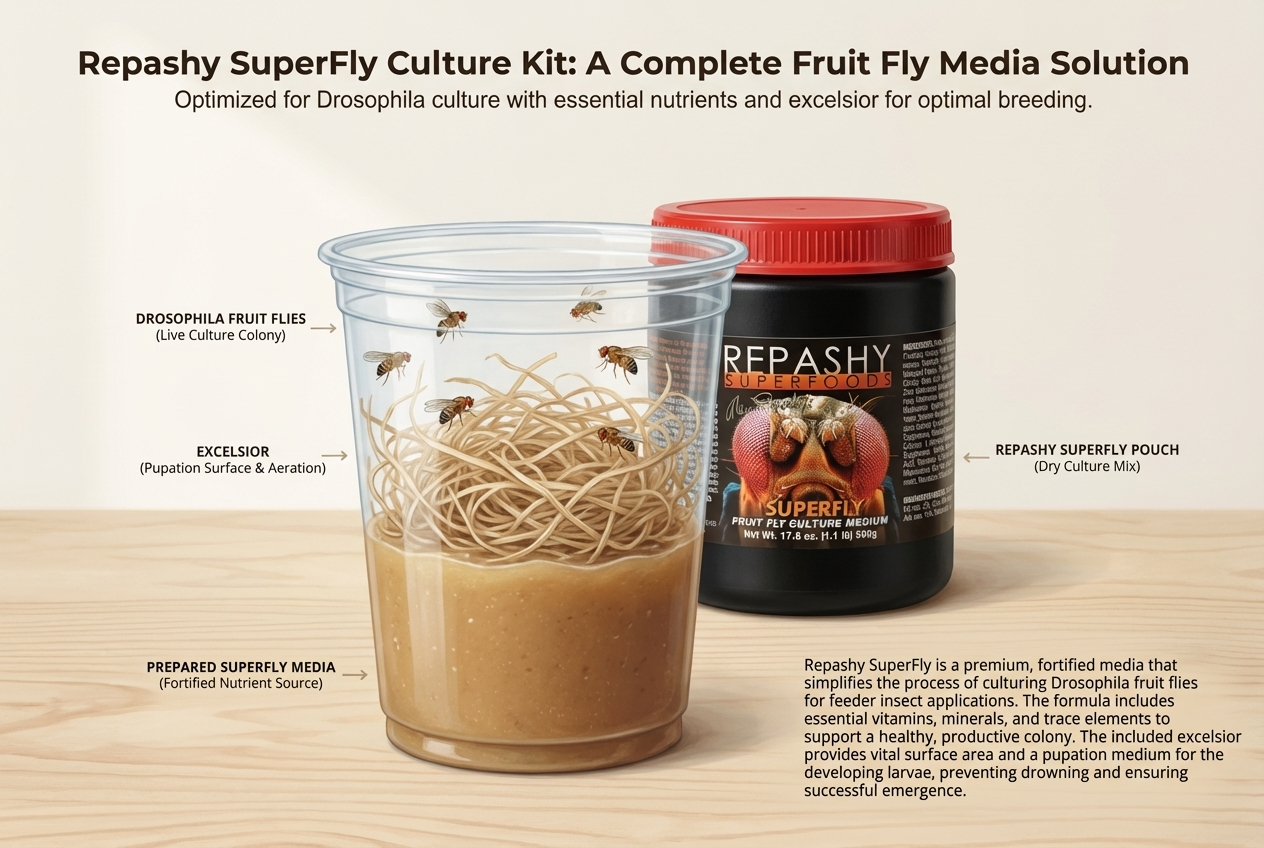
A Simple, Reliable System for Clean, Consistent Production
Introduction: Why Fruit Fly Cultures Often Fail
Fruit fly cultures seem straightforward—mix, add flies, and wait. But in reality, small mistakes compound quickly.
Too wet, and the culture turns into sludge.
Too dry, and development stalls.
Too early, and your starter flies get trapped before they even begin.
What most people need isn’t more complexity—it’s precision and consistency.
In this guide, we’ll walk through a reliable, repeatable method using Repashy SuperFly Fruit Fly Medium—designed to give you stable cultures, minimal odor, and dependable weekly output.
1. Getting the Mix Right (The Foundation of Everything)
Every successful culture starts with the correct base.
For a standard 32oz deli cup:
- 1/4 cup Repashy SuperFly
- 2/3 cup hot water
Hot water ensures the medium hydrates properly and binds evenly. Cold water often leads to inconsistent texture.
What you’re aiming for is a thick applesauce consistency—smooth, slightly glossy, and able to spread gently when the cup is tapped.
If the mix is too wet, flies will sink and drown. If too dry, larvae struggle to develop. This balance is what makes or breaks your culture.
Take a moment to get this right—it pays off for the entire lifecycle.

2. Optional Additives (When to Keep It Simple)
One of the biggest advantages of Repashy SuperFly Fruit Fly Medium is that it’s already a complete formula.
That said, some keepers make small adjustments depending on their environment.
A tiny splash of apple cider vinegar can help suppress mold and improve odor control in more humid setups. A light pinch of yeast may slightly boost early activity—but only in very small amounts.
In most cases, the best approach is straightforward:
👉 Start clean
👉 Observe your results
👉 Adjust only if needed
Consistency always outperforms unnecessary tweaking.
3. Building the Culture (Structure Matters More Than You Think)
A good culture isn’t just about the media—it’s about how the space is structured.
Start with a 32oz deli cup and a vented lid. Proper airflow is essential to prevent condensation and stagnation.
Inside the cup:
- The media sits at the base (bottom 1/3)
- Excelsior (wood wool) fills the upper section
- Optional: a coffee filter along the side
The excelsior provides critical surface area for:
- adult movement
- pupation
- airflow within the culture
Avoid compressing it—keep the structure loose and breathable.

4. Seeding the Culture (Timing Is Critical)
This is where many cultures fail—not from what you add, but when you add it.
After mixing your media, allow it to rest for 2–4 hours. This ensures it fully hydrates and cools.
Never introduce flies while the surface is still sticky or warm.
For best results:
- D. melanogaster → 50–75 flies
- D. hydei → 75–100 flies
Always seed from a strong, active culture. Weak starter cultures lead to weak outcomes.
A properly seeded culture sets up a smooth lifecycle from the start.
5. Environmental Control (Keeping It in the Sweet Spot)
Fruit fly cultures thrive in stable, moderate conditions.
Aim for:
- Temperature: ~24°C
- Humidity: 50–70%
Too much heat accelerates crashes. Too little slows everything down.
Watch your cultures—they tell you what’s happening:
- Media pulling away → too dry
- Condensation buildup → too wet
- Strong odor → imbalance
Cleanliness is equally important. Keep fresh cultures separated from older ones and maintain a tidy setup area.

6. Understanding the Lifecycle (So You Never Run Out)
Once your culture is running properly, timing becomes your biggest advantage.
For D. melanogaster:
- Larvae appear around 5–7 days
- New flies emerge around 10–15 days
For D. hydei, the process takes longer but yields larger flies:
- First hatch around 13–20 days
To maintain a steady supply:
- Start melanogaster cultures every 5–7 days
- Start hydei cultures every 7–10 days
Think of it as a rotation system—once you’re in rhythm, it becomes effortless.

7. Troubleshooting (Fix Problems Before They Snowball)
Even well-managed cultures can occasionally go off track. The key is identifying issues early.
If your media turns dark and foul-smelling, it’s likely too wet or overcrowded.
If it becomes dry and cracked, the environment is too dry or airflow is excessive.
If the culture crashes early, revisit:
- your mix ratio
- your seeding timing
- your temperature stability
Most problems trace back to the same three factors:
👉 moisture
👉 airflow
👉 timing
Once those are controlled, failures become rare.

Final Thoughts: Build a System, Not Just a Culture
The goal isn’t just to grow one successful culture—it’s to create a repeatable system.
By keeping your process simple and consistent using Repashy SuperFly Fruit Fly Medium, you eliminate guesswork and build reliability over time.
Once dialed in, your cultures will:
- run cleaner
- last longer
- produce consistently
…and most importantly, require very little intervention.


