
What Makes Ripariums Feel So Different
This guide is created by Green Chapter — Nature Workshop Studio, where we focus on creating living ecosystems through hands-on experience. We share practical insights across terrariums, aquascaping, plants, and natural systems to help you build and care for your own.
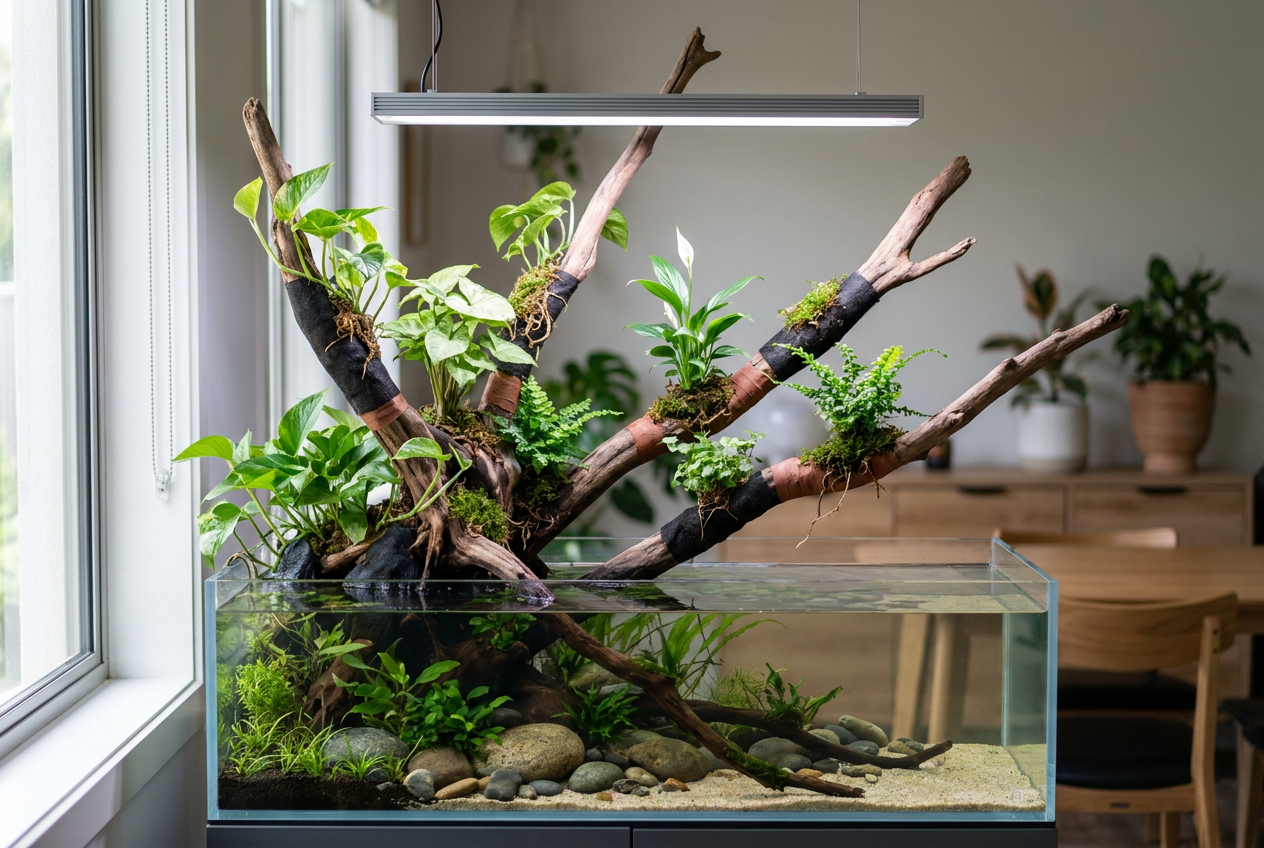
Wide riparium-style aquarium with tropical plants growing above the waterline from driftwood structures wrapped with hygrolon, premium ecosystem editorial photography.
Most planted tanks stop at the waterline.
Ripariums try to continue the ecosystem upward.

The result feels somewhere between:
- aquarium
- flooded forest edge
- botanical display
- tropical shoreline
Plants spill outward into open air while roots grip onto damp wood and moss instead of disappearing into substrate below.
The whole setup feels less “arranged” compared to a normal aquascape. Good ripariums often look like the structure slowly climbed upward on its own.
The Upper Section Is Usually The Difficult Part

Most beginners focus heavily on the aquarium below.
The difficult part is usually everything above the waterline.
The lower aquarium is often fairly simple:
- low light plants
- stable filtration
- soft water movement
- calm maintenance routine
The upper structure is where the balancing starts.
Too dry, and exposed roots crisp up quickly.
Too wet, and the whole structure slowly turns swampy. Moss thickens too much, airflow disappears, and stagnant wet pockets begin forming underneath the growth.
Many failed ripariums do not collapse immediately. The system simply becomes slightly wetter every month until parts of the upper structure eventually destabilise.
Why Hygrolon Works So Well

The first time most people touch hygrolon, it honestly just feels like synthetic fabric.
Once water starts moving through it, the whole system becomes easier to understand.
Hygrolon spreads moisture through capillary action. Instead of flooding the roots continuously, the material stays damp while still allowing airflow around the root zone.
That difference matters a lot.
Most riparium plants do not actually want permanently soaked roots. They prefer:
- moisture
- humidity
- airflow
- oxygen around the roots
A healthy riparium normally feels slightly damp.
Not soaked.
How Water Reaches The Upper Structure

One of the biggest beginner questions is:
“How are the upper plants staying wet?”
Most ripariums secretly contain a second moisture system.
The lower canister filter usually handles:
- water clarity
- circulation
- biological stability
But it does not automatically hydrate the upper structure.
This is where small hidden pumps come in.
Thin tubing is usually hidden:
- behind wood
- along the back glass
- inside hardscape gaps
- underneath hygrolon layers
Water is then delivered slowly near the top of the structure through:
- drip outlets
- seepage points
- misting nozzles
- slow trickles
Once the hygrolon becomes wet, capillary action starts spreading moisture through the surrounding surfaces.
Most successful systems do not run aggressive waterfalls continuously. Gentle moisture cycling usually works much better long term.
The Biggest Beginner Mistake

The common beginner instinct is:
“If the plants like moisture, more water should be better.”
That is usually where problems begin.
Overwatering appears slowly:
- moss becomes overly dense
- roots stay permanently wet
- algae spreads into damp zones
- airflow weakens behind growth
Eventually parts of the structure begin collapsing into black slime or rotting moss.
Most failed ripariums are not caused by bad plant choices.
The moisture balance simply drifts too far toward saturation.
Why Hanging Lights Matter

Ripariums behave more like vertical ecosystems than flat aquascapes.
Once the plants begin climbing upward, standard aquarium lighting often starts feeling cramped. Hanging lights create more breathing room above the structure and help the whole setup feel lighter visually.
The extra height also improves:
- vertical spread
- plant layering
- shadow depth
- overall atmosphere
Without suspended lighting, many ripariums quickly start feeling compressed and overcrowded.
Plants That Usually Adapt Well

One nice thing about ripariums is that many adaptable tropical plants already work surprisingly well in these conditions.
The important part is not choosing the rarest plants.
It is choosing species that tolerate:
- exposed roots
- damp surfaces
- changing humidity
- occasional drying
- airflow around leaves
| Plant Group | Examples | Why They Work Well |
|---|---|---|
| Best Beginner Plants | Pothos Peace Lily Syngonium Spider Plant Creeping Fig |
Fast adapting, forgiving with changing humidity, and tolerant of exposed roots. |
| Moss & Epiphyte Choices | Java Moss Christmas Moss Java Fern Anubias Small tropical ferns |
Naturally suited for damp surfaces, driftwood attachment, and humid environments. |
| Plants For Mature Humid Systems | Marcgravia Jewel Orchids Miniature Begonias Mini orchids Emersed Bucephalandra |
Prefer stable humidity, mature moss growth, and more controlled moisture balance. |
| Plants That Often Struggle | Succulents Dry-air houseplants Heavy soil-rooted plants |
Usually dislike exposed damp roots, fluctuating humidity, or constant moisture contact. |
Ripariums generally work best with plants that naturally grow:
- along streambanks
- on wet rocks
- attached to trees
- near rainforest seepage zones
The Aquarium Below Usually Stays Simple

One pattern appears repeatedly in strong riparium builds.
The upper structure becomes dramatic while the aquarium below stays calm and restrained.
That lower section mainly supports:
- humidity
- biological stability
- reflections
- visual balance
Trying to overload both sections at once often creates visual clutter.
The contrast between calm water and dense upper growth is what gives ripariums their atmosphere.
Why These Systems Become So Addictive

At some point, the setup stops feeling like a normal aquarium.
The ecosystem starts extending beyond the waterline itself. Moisture climbs into moss, roots, wood fibers, and humid air. Reflections from the tank below interact with leaves above the surface.
The whole system begins feeling more like a living shoreline than a glass aquarium.
That is usually the stage where many hobbyists stop thinking purely about aquascaping and start experimenting with ecosystem behaviour instead.


