
Why You Should Never Use Your Mouth to Start an Aquarium Siphon
This guide is created by Green Chapter — Nature Workshop Studio, where we focus on creating living ecosystems through hands-on experience. We share practical insights across terrariums, aquascaping, plants, and natural systems to help you build and care for your own.
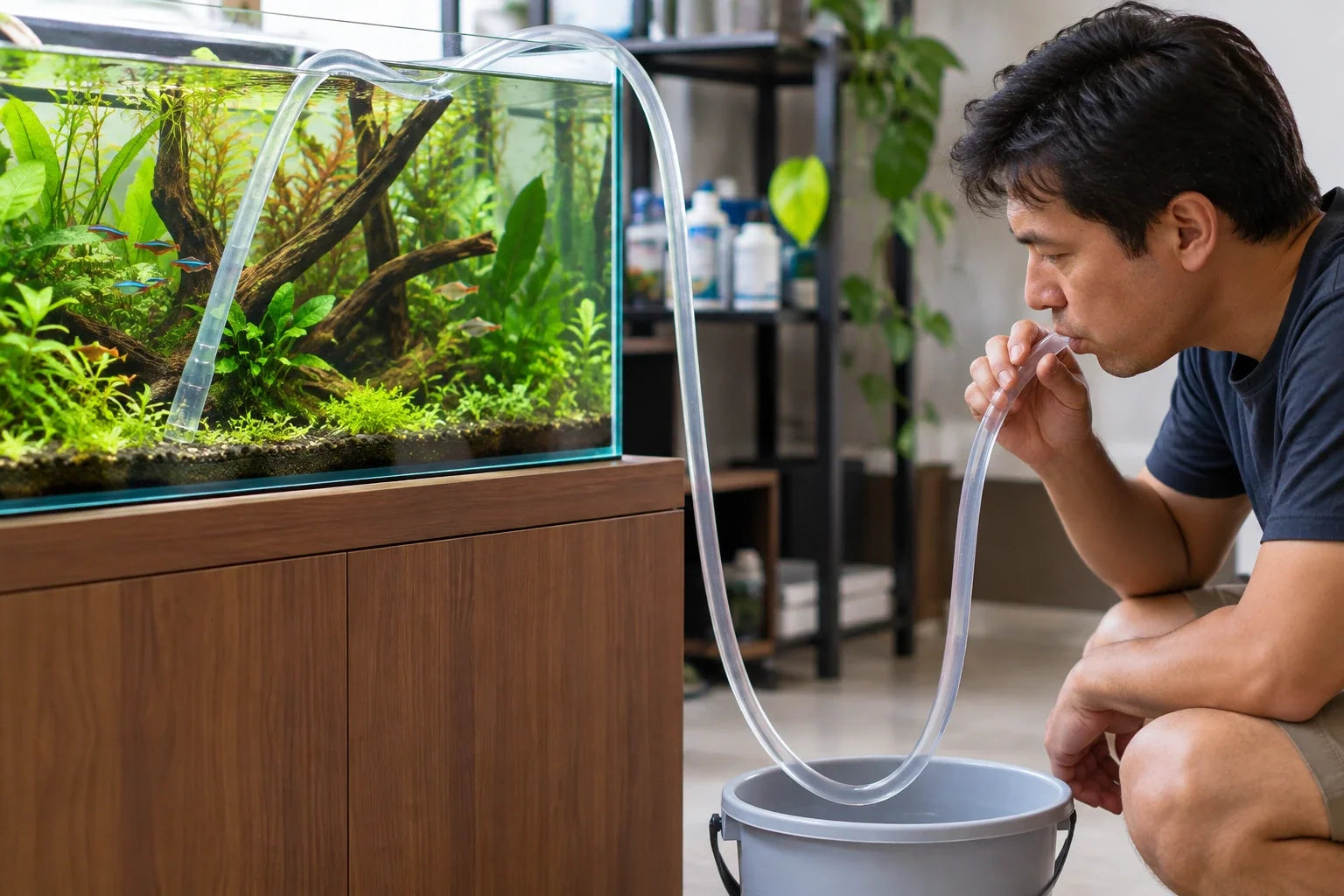
Have you ever started an aquarium water change by sucking on the end of a hose?
Many aquarium hobbyists have done this. You place one end of the hose inside the aquarium, suck on the other end until water starts moving, and quickly lower it into a bucket or drain.
It works, and you may have done it for years without any problems.
But have you ever thought about what might be inside that hose? Or where the hose was stored before you put it into your mouth?
The concern is not just accidentally swallowing aquarium water. The hose itself may be much dirtier than you think.
1. Aquarium Water Is Not as Clean as It Looks
Your aquarium may look crystal clear, with healthy fish, beautiful plants and clean glass.
However, clear water does not mean it is free from germs.
Aquarium water comes into contact with fish waste, leftover food, decaying plants and many different microorganisms.
Most microorganisms in an aquarium are harmless to people. Some are even important for keeping the aquarium healthy.
However, aquarium water can also contain germs that may cause illness if they enter your body.
Accidentally swallowing contaminated water could sometimes lead to stomach discomfort, vomiting or diarrhoea.
This does not mean that a little aquarium water will automatically make you sick. Aquarium-related infections are relatively uncommon, but the risk is unnecessary when safer ways to start a siphon are available.
Water that is healthy for your fish is not necessarily clean enough to put in your mouth.
2. Your Siphon Hose May Be Dirtier Than You Think
Now consider the hose itself.
Unlike aquarium glass or filters, siphon hoses are often used briefly during water changes and then stored away until the next maintenance session.
Where do you usually keep yours?

Perhaps it is coiled inside a cabinet, left in a bucket, placed on the storeroom floor or kept near a floor drain.
Depending on how it is stored, the hose may collect dust, dirt and other contamination.
If the storage area is accessible to cockroaches, rodents or other pests, the hose may also come into contact with contaminated surfaces or pest waste.
And what about the inside?
After a water change, small amounts of water, dirt and organic waste may remain inside the tubing.
Over time, a damp hose can develop a slippery layer of microbial growth known as biofilm. This is similar to the slimy coating you may sometimes feel on wet aquarium equipment.
Not every biofilm contains harmful germs, but a hose that looks clean from the outside is not necessarily hygienically clean inside.

Think about it: would you drink through a straw that had been left on a storeroom floor or stored wet for several weeks?
That is essentially the hygiene concern when you place a maintenance hose into your mouth.
3. What Could Happen If You Accidentally Get Aquarium Water in Your Mouth?
In most cases, accidentally getting a small amount of aquarium water into your mouth will not necessarily result in illness.
However, there is still a possibility of exposure to germs from the water or the hose.
Some germs can cause stomach-related illness, while others may cause infections when contaminated water comes into contact with cuts or broken skin.
If aquarium water accidentally enters your mouth:
-
Spit it out rather than swallowing it.
-
Rinse your mouth with clean drinking water and spit out the rinse.
-
Wash your hands and any contaminated skin with soap and water.
-
Seek medical advice if you develop persistent or severe symptoms, such as diarrhoea, vomiting or fever.
There is no need to panic over a minor accidental exposure.
The better approach is simply to avoid making mouth suction part of your regular aquarium maintenance routine.
4. Safer Ways to Start an Aquarium Siphon
You do not necessarily need to buy special equipment to start a siphon.
A siphon works when the hose is filled with water and its discharge end is positioned lower than the aquarium's water surface.
Once the water begins flowing, gravity can keep it moving.

Here are several practical methods.
Method 1: Fill a Short Hose With Water First
This is one of the simplest methods for a short hose.
-
Fill the hose completely with clean water, making sure there are as few air bubbles as possible.
-
Close both ends with your fingers.
-
Place one end underwater inside the aquarium.
-
Lower the other end into a bucket or drain below the aquarium's water level.
-
Release the discharge end to begin the siphon.
Keep the aquarium end submerged while the water flows.
If you are using untreated tap water, avoid allowing it to drain into the aquarium. Where necessary, use aquarium-safe, dechlorinated water to prime the hose.
Method 2: Prime a Long Hose Using a Tap
For larger aquariums, you may use a longer hose that runs directly to a floor trap or drain.
A tap can help fill the hose before siphoning.
-
Connect one end of the hose to a suitable tap connection with proper backflow protection.
-
Secure the other end underwater inside the aquarium.
-
Turn on the tap slowly to fill the hose.
-
Once the hose is filled, turn off the tap.
-
Disconnect the tap end and lower it into a floor trap or drain below the aquarium's water level.
-
Allow gravity to take over.
Important: Never allow aquarium water to flow backwards into your household drinking-water supply. Use appropriate backflow protection, and do not leave a direct tap connection unattended.
Also, avoid introducing untreated tap water into an aquarium containing livestock.
Method 3: Use Your Canister Filter Outlet
If your aquarium uses a canister filter, you may be able to use its water output to help start the flow.
This method depends on the filter and plumbing arrangement.
-
With the filter running, connect a suitable drainage hose to the filter outlet.
-
Direct the hose into a bucket or drain.
-
Allow the filter to fill the hose with aquarium water.
-
Once the hose is filled, switch off the filter.
-
Keep the discharge end below the aquarium's water level.
If the filter's plumbing allows water to continue flowing freely from the aquarium, gravity may maintain the siphon.
However, not all canister filters support this method. Some valves and internal arrangements may stop the flow when the pump is switched off.
Never force incompatible connections or operate a filter with a blocked outlet.
Method 4: Fill the Hose Underwater
If the hose is short enough, you can fill it directly inside the aquarium.
Submerge the entire hose until the trapped air escapes.
Close one end with your finger, lift it out of the aquarium and lower it into a bucket below the water level.
Release your finger to begin draining.
This method works best with short, flexible hoses and aquariums with enough room to submerge the tubing.
Method 5: Use a Siphon Pump or Gravel Vacuum
A hand-operated siphon starter is a convenient option, particularly for beginners.
Many aquarium siphons come with a squeeze bulb or a built-in priming mechanism.
Place the intake inside the aquarium, position the outlet below the water level, and operate the primer until water flows.
Some gravel vacuums also have a shake-to-start mechanism.
These tools make it easier to begin water changes without putting the hose near your mouth.
Method 6: Use a Small Water Pump
If you regularly drain large aquariums or need to move water over a longer distance, a small submersible pump may be useful.
Connect a suitable hose to the pump, place the pump underwater and direct the hose towards the drainage point.
Switch on the pump to move the water.
Unlike a gravity siphon, a pump can also move water to a higher location, provided it is powerful enough.
Use a pump designed for aquarium or water-transfer applications, and keep its intake away from fish, shrimp and loose substrate.
Regardless of the method, always secure the hose, watch the aquarium water level and avoid leaving the system unattended.

5. Keep Your Aquarium Maintenance Equipment Clean
Avoiding mouth suction is only one part of good aquarium hygiene.
Your maintenance equipment also deserves regular cleaning and proper storage.
A few simple habits can make a difference.

Rinse your hoses after use. Flush out loose dirt, waste and leftover aquarium water. If deposits build up inside, clean accessible sections with a suitable tubing brush.
Drain and dry them when possible. Avoid leaving dirty water trapped inside a coiled hose for long periods.
Store them somewhere clean. Keep hoses off dirty floors and away from drains, pests and household waste.
Keep quarantine equipment separate. Ideally, use dedicated hoses, nets and tools for quarantine or sick-fish tanks to avoid transferring contamination between aquariums.
Wash your hands after maintenance. Use soap and clean water, especially before eating or handling food. Cover cuts with waterproof dressings or wear suitable gloves when necessary.
Avoid using ordinary household detergents or disinfectants on aquarium equipment unless they are appropriate for that purpose and can be safely removed. Cleaning chemical residues may harm aquarium livestock.
6. A Small Habit Worth Changing
Many aquarium hobbyists have used mouth suction to start siphons for years without experiencing any obvious problems.
But just because a habit has not caused problems before does not mean it is hygienic.
Aquarium water is not drinking water, and maintenance hoses may have been exposed to dirt, trapped waste or contamination during storage.
With several simple ways to start a siphon, there is little reason to put a maintenance hose into your mouth.
Good aquarium maintenance is not only about keeping the water clean for your fish. It is also about keeping yourself and your equipment clean.
The next time you change your aquarium water, start your siphon without using your mouth. It is a small change that makes good hygiene part of your regular routine.


