
What is Aquascaping?
This guide is created by Green Chapter — Nature Workshop Studio, where we focus on creating living ecosystems through hands-on experience. We share practical insights across terrariums, aquascaping, plants, and natural systems to help you build and care for your own.
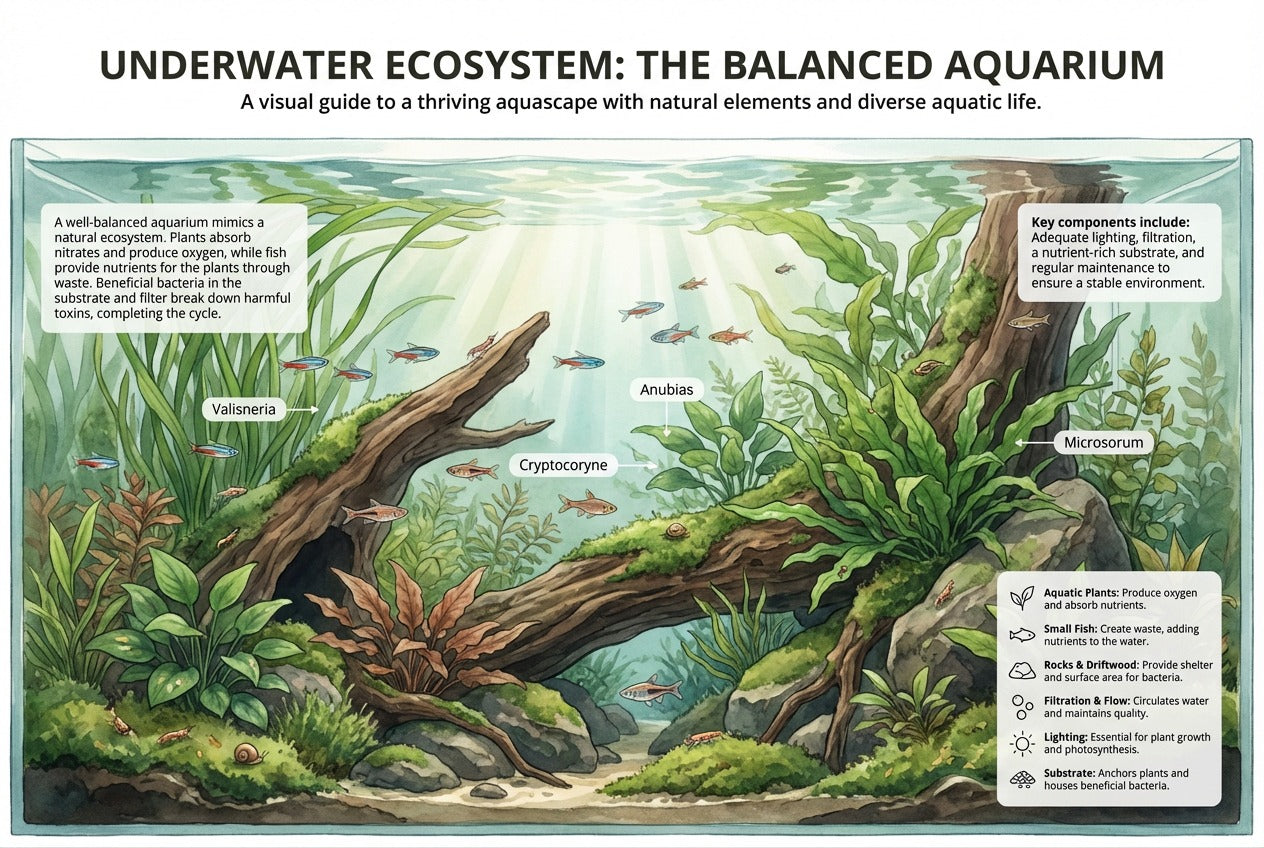
Aquascaping is the art of arranging aquatic plants, rocks, driftwood, and substrate inside an aquarium to create a natural underwater landscape.
It combines nature, design, and ecology, turning a simple fish tank into a living, evolving ecosystem. From dense plant gardens to minimal rock layouts, aquascaping allows you to recreate—or reinterpret—nature in a glass box.
The Origin of Aquascaping

Aquascaping began in the 1930s Netherlands, where hobbyists created structured plant layouts known as Dutch-style aquariums. These early designs focused on plant arrangement, color contrast, and depth.
The modern direction of aquascaping was later shaped by Takashi Amano, who introduced the Nature Aquarium concept—bringing real-world landscapes like forests and rivers into aquariums.
Today, aquascaping is a global hobby that blends artistic composition with natural ecosystems.
Types of Aquascaping Styles
Dutch Style Aquascape

The Dutch style is the earliest form of aquascaping and focuses entirely on plants.
Key features:
- Dense planting with strong color contrast
- Plants arranged in rows (“streets”)
- No rocks or driftwood
Typical setup:
- Stem plants (Rotala, Ludwigia, Hygrophila)
- CO₂ required
- Heavy fertilization
Best for those who enjoy plant maintenance and trimming.
Iwagumi Style Aquascape

The Iwagumi style emphasizes simplicity and balance using rocks.
Key features:
- Minimalist layout
- Rocks arranged in odd numbers
- Open space with limited plant types
Typical setup:
- Carpet plants (hairgrass, HC)
- CO₂ required
- Strong focus on composition
Simple in appearance but requires stability and precision.
Nature Style Aquascape

The Nature style recreates natural landscapes such as forests and valleys.
Key features:
- Natural-looking composition
- Combination of wood, rocks, and plants
- Balanced foreground, midground, background
Typical setup:
- Mixed plant types
- Driftwood + rocks
- CO₂ recommended
The most popular and beginner-friendly style.
Biotope Aquascape

Biotope aquascaping recreates a specific natural habitat as accurately as possible.
Key features:
- Region-specific design
- Natural materials like sand, leaves, branches
- Matching fish and plants
Typical setup:
- Minimal or no CO₂
- Limited plant selection
- Focus on realism
Ideal for those interested in ecosystems rather than design.
Modern Diorama / Landscape Style

A modern style that creates dramatic, highly detailed landscapes.
Key features:
- Mountain, canyon, or fantasy scenes
- Strong depth and perspective
- Construction-based layouts
Typical setup:
- Foam structures + glue
- Moss and small plants
- CO₂ required
Highly creative but more advanced.
Basic Components of an Aquascape

Hardscape Materials
Rocks and driftwood form the structure of the layout, while substrate (soil or sand) supports plant growth. Advanced setups may use foam for shaping terrain.
🌱 Plant Categories
- Stem plants: Fast-growing background plants
- Rosette plants: Root feeders like Cryptocoryne
- Rhizome plants: Attached to wood/rock (Anubias, Buce)
- Carpet plants: Foreground coverage
💨 CO₂ System
CO₂ boosts plant growth and is essential for high-tech aquascapes. Low-tech setups may run without it.
🧪 Fertilizers
Plants require nutrients such as nitrogen, phosphorus, potassium, and trace elements to stay healthy.
🧴 Tools & Materials
Tweezers, scissors, glue, and thread help with planting and securing materials during setup.
How Beginners Should Start

Recommended:
- Nature style
- Simple Iwagumi
Avoid initially:
- Dutch style (high maintenance)
- Diorama style (complex setup)
Focus on plant health, stable conditions, and basic layout before moving into advanced designs.
Final Thoughts
Aquascaping has evolved from structured plant layouts to natural ecosystems and artistic landscapes.
At its core, it is a balance between:
- Nature
- Design
- Living systems
Every aquascape grows and changes over time—making it a rewarding journey for beginners and experienced hobbyists alike.


