
Gunpla Beginner Guide: From First Build to Mecha Diorama Creation
This guide is created by Green Chapter — Nature Workshop Studio, where we focus on creating living ecosystems through hands-on experience. We share practical insights across terrariums, aquascaping, plants, and natural systems to help you build and care for your own.
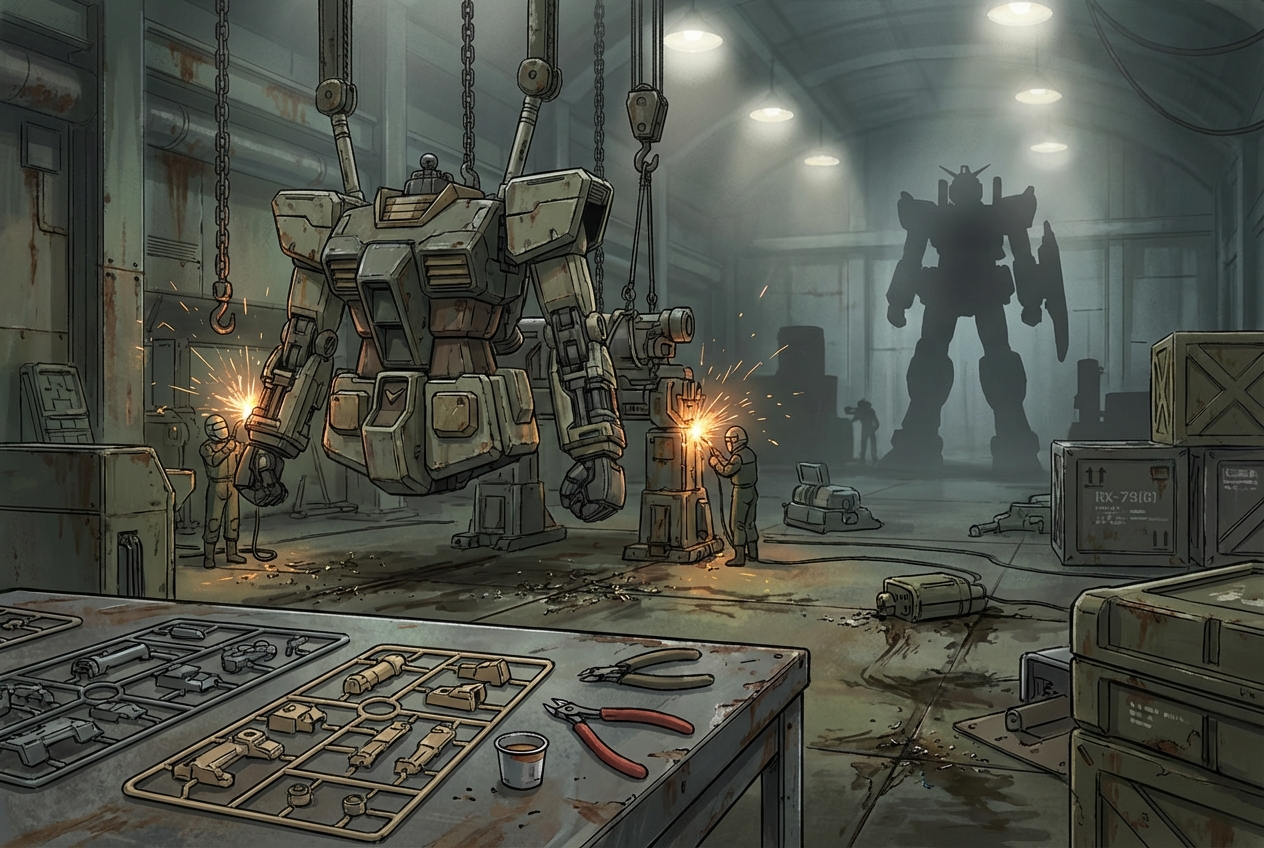
Introduction — What is Gunpla
Gunpla, short for Gundam Plastic Model, is a hands-on hobby where you assemble highly detailed mecha models produced by Bandai Namco.
Unlike typical collectibles, Gunpla invites you into the process—cutting parts, assembling components, and gradually bringing a mechanical design to life.
For beginners, it starts simple. But over time, it becomes something more—an intersection of engineering, creativity, and storytelling.
Think of it not just as “building a model,” but as constructing your own piece of a living mechanical world.
Gunpla Ecosystem
As you step into the hobby, you’ll quickly realize that Gunpla is part of a larger ecosystem.
There are three main paths:
- Model Kits (Build) — You assemble everything yourself
- Collectible Figures (Display) — Fully finished, no building required
- Candy Toy Lines (Compact Collectibles) — Small-scale, simplified versions
Each path serves a different type of hobbyist—from builders who enjoy the process, to collectors who focus on display.
The key decision is simple:
Do you want to build—or collect?

Size & Scale System
One of the first things you’ll notice is that Gunpla comes in different sizes, known as “scales.”
- HG / RG (1/144) — Small, compact, beginner-friendly
- MG (1/100) — Larger, more detailed
- PG (1/60) — Highly complex, display-grade
- Mega Size (1/48) — Massive presence, simpler build
What this really means:
The bigger the model, the greater the visual impact—and the more detail you can work with.
For beginners, understanding scale is the fastest way to choose the right starting point.

Grade & Complexity System
Beyond size, Gunpla is also categorized by grades, which define build complexity.
- EG / HG → Simple builds, fewer parts
- RG → Small size but very high detail
- MG → Full internal structure and layered armor
- PG → Multi-layer engineering, often with lighting
Think of grades as a progression:
From quick assembly → mechanical mastery
As you move up, you’re not just building—you’re understanding how the machine works.

Build vs Collect Spectrum
Not everything in the Gundam world requires building.
On one end:
- Ready-made figures (instant display)
On the other:
- Fully assembled model kits (complete build experience)
In between:
- Hybrid formats with light assembly
This spectrum exists so you can choose your level of involvement—whether you want convenience or creativity.

Beginner Decision Guide
If you’re starting out, keep it simple:
- Want something easy? → Start with HG
- Want more detail? → Try RG or MG
- Want a challenge? → Move into PG
There’s no “best” starting point—only what fits your interest and pace.
The goal is not perfection.
It’s to start building and enjoy the process.

Transition — Gunpla to Mecha & Moss
Here’s where things get interesting.
Gunpla doesn’t have to stay as a standalone model.
When combined with natural materials—moss, soil, wood—it becomes something entirely different:
A living diorama
This is the foundation of our Mecha & Moss concept:
- Machines placed into nature
- Stories told through decay, weathering, and time
Instead of displaying a model, you’re creating a scene.

Terrarium Size Mapping
When building Mecha & Moss scenes, scale becomes critical.
- Small setups (10–20cm) → HG / RG
- Medium builds (20–40cm) → MG
- Large ecosystems (60cm+) → PG
Larger models allow:
- More detailed weathering
- Stronger visual storytelling
- Better presence within the environment
Choosing the right scale ensures your scene feels natural—not cramped or oversized.

Diorama Scene Composition
For dynamic scenes, HG models are the most versatile.
They allow you to:
- Create multi-unit battles
- Position models naturally
- Build layered storytelling
Typical setups include:
- Single unit (fallen or idle)
- 2–3 unit combat scenes
Smaller scale = more flexibility = stronger storytelling

Conclusion
Gunpla begins as a model kit—but it doesn’t end there.
It evolves into:
- A creative outlet
- A storytelling medium
- A bridge between mechanical design and nature
When combined with terrarium design, it becomes something unique:
A world where machines and nature coexist
And that’s where the real creativity begins.

If you’re curious to take this a step further, our Mecha & Moss Workshop brings this concept to life. Instead of simply building a model, you’ll learn how to weather your Gundam and integrate it into a natural moss environment—transforming it into a cinematic, living diorama. It’s a hands-on experience designed for beginners and enthusiasts alike, where you leave not just with a finished piece, but with a story you’ve created. Explore the workshop and see how your first Gunpla can become something truly unique.


