
Why Fungus and Mold Grow in My Terrarium
This guide is created by Green Chapter — Nature Workshop Studio, where we focus on creating living ecosystems through hands-on experience. We share practical insights across terrariums, aquascaping, plants, and natural systems to help you build and care for your own.
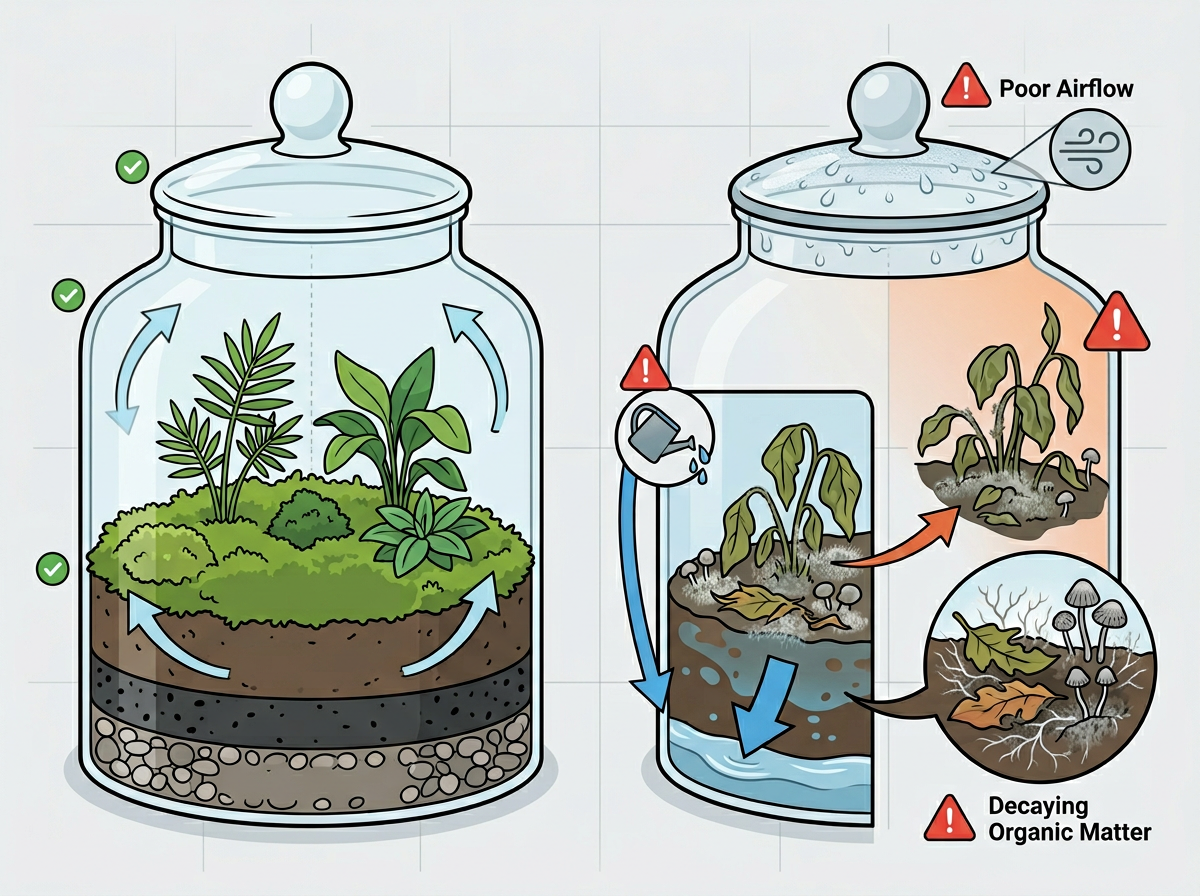
Understanding Fungus in Terrariums

If you see white fuzzy mold, web-like fungus, or small mushrooms growing in your terrarium — don’t panic. This is actually very common, especially in newly built terrariums.
A terrarium is a warm, humid, enclosed ecosystem, which is the perfect environment not only for plants and moss, but also for fungus and mold. In nature, fungus is part of the ecosystem — it helps break down dead organic matter like leaves and wood.
However, when fungus grows too much, it becomes unsightly and may harm plants.
The Main Causes of Mold in Terrariums
1. Too Much Moisture (Overwatering)
The number one cause. If the glass is always covered with heavy condensation, the environment is too wet.
2. Poor Air Circulation
Closed terrariums with no ventilation encourage mold growth.
3. Too Much Organic Matter
Wood, leaf litter, and dead moss can grow fungus when constantly wet.
4. New Terrarium Syndrome
New setups often grow mold in the first 2–4 weeks. This is normal and usually stabilizes.
5. No Cleanup Crew
In nature, insects like springtails eat mold and fungus. Without them, fungus grows freely.
Important Note
Not all fungus is bad.
Small amounts mean your terrarium ecosystem is active and healthy.
The problem only comes when fungus takes over the tank.
How to Prevent Fungus and Mold

Prevention is Much Easier Than Cure
Follow these steps when building your terrarium:
1. Build a Proper Drainage Layer
Your terrarium should have:
- Drainage layer (LECA / stones)
- Activated charcoal layer
- Soil layer
- Moss layer
Activated charcoal helps absorb odor, bacteria, and fungus spores.
2. Do Not Overwater
Rule of thumb:
- Closed terrarium → Water very little
- Open terrarium → Mist lightly when dry
- Moss terrarium → Slightly moist, not wet
If you see large water droplets on glass all day, it is too wet.
3. Add Springtails (Highly Recommended)
Springtails are tiny white insects that:
- Eat mold
- Eat fungus
- Eat rotting matter
- Keep terrarium clean
They are the best natural mold control.
4. Give Some Air Flow
Open the lid:
- 10–20 minutes every few days
- Or keep a small ventilation gap
5. Use Clean Materials
Before using:
- Wash stones
- Soak wood
- Remove dead leaves
- Do not use contaminated soil
How to Solve Fungus and Mold Problems

If You Already Have Mold — Follow This Step-By-Step
Step 1 — Reduce Moisture
- Open the lid
- Wipe off condensation
- Stop watering for 1–2 weeks
Step 2 — Manual Removal
- Use tweezers to remove moldy wood/leaves
- Use cotton swab to remove white mold
- Remove dead plants
Step 3 — Add Springtails
This is the long-term solution.
They will eat the mold and prevent future outbreaks.
Step 4 — Use Cinnamon Powder (Natural Fungicide)
Lightly sprinkle cinnamon powder on:
- Moldy soil
- Moldy wood
- Moldy moss
Cinnamon is a natural antifungal and safe for terrariums.
Step 5 — Last Resort
If mold keeps coming back:
- Remove affected soil
- Replace with new soil
- Rebuild terrarium with better drainage

Quick Summary Table
| Problem | Cause | Solution |
|---|---|---|
| White fuzzy mold | Too wet | Dry terrarium |
| Mushrooms | Too much organic matter | Remove and reduce moisture |
| Mold on wood | Constant moisture | Add springtails |
| Mold on moss | Poor airflow | Open lid regularly |
Final Advice
Think of a terrarium like a mini forest.
To keep it healthy, you need:
- Not too wet
- Some airflow
- Cleanup crew (springtails)
- Patience (ecosystem takes time to balance)
Once balanced, a terrarium can run for months or years with very little mold.


